


Semnal / First edition
The complete reading list
48 articles across six sections, with room for a quick discovery or a closer reading. Explore the research, company profiles and field guides in our first edition.
The first edition was released on November 4, 2026. Display dates follow its editorial schedule and do not indicate earlier public availability. Source notes use the article date; research dates are identified within each story.
16
Research brief
16
Research feature
8
Company profile
8
Field guide
Neural Edge
- 01. How a cochlear implant turns sound into a neural signal
Cochlear implants bypass damaged parts of the inner ear. What does that mean for hearing speech, and why is rehabilitation still essential?
Research brief · Sep 17, 2026 · 315 words
- 02. An implant for balance—and a difficult hearing trade-off
An experimental vestibular implant aims to restore balance signals. A small human study also reveals a serious hearing trade-off.
Research feature · Apr 26, 2026 · 647 words
- 03. A voice in real time: the next challenge for speech interfaces
A speech brain-computer interface turns attempted speech into a voice as it happens. One woman's results show promise, with important limits.
Research feature · Sep 7, 2026 · 663 words
- 04. Who decides when a brain interface speaks?
Can a brain-computer interface decode inner speech while leaving its user in control? Early research makes privacy part of the engineering problem.
Research brief · Aug 31, 2026 · 287 words
- 05. Brain stimulation that listens before it responds
Adaptive deep brain stimulation responds to changing brain signals. A small Parkinson's study explores more personalised treatment.
Research feature · Jul 5, 2026 · 635 words
- 06. A digital bridge between the brain and spinal cord
A brain–spine interface helped one man regain more control of walking. The result is a research milestone, not a general treatment for mobility loss.
Research feature · Jun 17, 2026 · 624 words
- 07. When light becomes an electrical signal inside the eye
PRIMA improved measured vision in a trial of advanced macular degeneration. A July 2026 European launch adds an access milestone—but surgery, training and funding still matter.
Research feature · Oct 10, 2026 · 669 words
- 08. The missing return path: giving a robotic hand a sense of touch
Touch feedback could make a prosthetic hand easier to control. The challenge is turning laboratory signals into useful everyday sensation.
Research brief · Apr 13, 2026 · 306 words
Sensory AI
- 09. Choosing one voice in a crowded room
AI hearing assistance in noisy places starts with a deceptively hard task: choosing which voice to keep.
Research feature · Oct 30, 2026 · 665 words
- 10. A listening bubble built around distance
A sound bubble aims to separate nearby voices from distant noise. Why distance-aware audio could matter at a busy table.
Research brief · Aug 11, 2026 · 309 words
- 11. Can an AI listener follow the conversation you are in?
Conversation-aware headphones try to follow the person you are speaking with. A promising idea still needs testing beyond the demonstration.
Research feature · Apr 20, 2026 · 660 words
- 12. An image description is an interpretation, not eyesight
AI image descriptions can help people with low vision read and explore. Seeing AI also shows why useful assistance needs clear limits.
Research brief · Jul 12, 2026 · 311 words
- 13. What assistive AI learns when users shape the interface
Google Lookout uses a phone camera to interpret text and surroundings. Accessibility depends on more than recognising an object correctly.
Research brief · Mar 25, 2026 · 314 words
- 14. Your gaze as a control signal
Eye tracking can make a phone or tablet usable without touch. Setup, fatigue and reliable selection matter as much as the demonstration.
Research feature · May 30, 2026 · 656 words
- 15. When a software update becomes a hearing device
Hearing aid software turns familiar headphones into a regulated hearing tool. The evidence and eligibility rules matter more than the gadget label.
Research brief · Jun 13, 2026 · 310 words
- 16. Why clearer sound is harder than louder sound
Does AI noise reduction actually make speech easier to understand? A quieter recording and a better conversation are different outcomes.
Research brief · May 4, 2026 · 311 words
Bionic Motion
- 17. A soft suit tackles the moment between sitting and walking
A soft robotic suit helped older adults stand up in a small study. We examine the measured gains and the questions about everyday use.
Research feature · Sep 25, 2026 · 664 words
- 18. A robotic ankle that learns the person wearing it
Personalised exoskeleton assistance needs to fit a person's movement. Why an efficient laboratory walk is only the beginning.
Research feature · Oct 1, 2026 · 663 words
- 19. The surgical connection behind a more responsive prosthetic leg
A prosthetic leg connected to muscle signals points towards more intuitive walking. The evidence comes from a small, carefully defined study.
Research feature · Oct 26, 2026 · 654 words
- 20. Turning muscle intention into a powered knee movement
A bionic knee needs to respond to its user's intention. An early research example shows why control matters as much as mechanical power.
Research brief · Mar 20, 2026 · 302 words
- 21. Why a robotic glove does not need a rigid hand
A soft robotic glove can help a hand grasp. The useful questions begin with comfort, putting it on and the tasks it can support.
Research brief · May 19, 2026 · 312 words
- 22. Wearable assistance that adapts to the arm
An arm-support robot learned to offer more personal assistance in a nine-person study. Its most revealing improvement was helping users lower their arms again.
Research feature · May 8, 2026 · 651 words
- 23. The two jobs of an ankle-assisting exosuit
A soft exosuit for stroke rehabilitation targets ankle movement. A clinical study examines use under supervision, not independent walking for everyone.
Research brief · Jun 29, 2026 · 303 words
- 24. What changes when rehabilitation leaves the laboratory?
A robotic glove used at home raises practical questions about rehabilitation: who can use it, who helps and what improvement lasts?
Research brief · Apr 9, 2026 · 302 words
Matter Lab
- 25. A soft sheet that reads its own shape
A shape-sensing sheet could help soft devices detect how they bend. The material is a research building block, not a finished health monitor.
Research feature · Nov 4, 2026 · 686 words
- 26. The fabric that turns vibration into a signal
Acoustic fabric turns vibrations into electrical signals. Could a textile help sense sound without becoming a conventional microphone?
Research brief · May 26, 2026 · 306 words
- 27. A thin fabric takes on unwanted sound
Silk-based materials offer a new approach to controlling noise. A laboratory result does not yet tell us how a room will sound.
Research brief · Aug 26, 2026 · 299 words
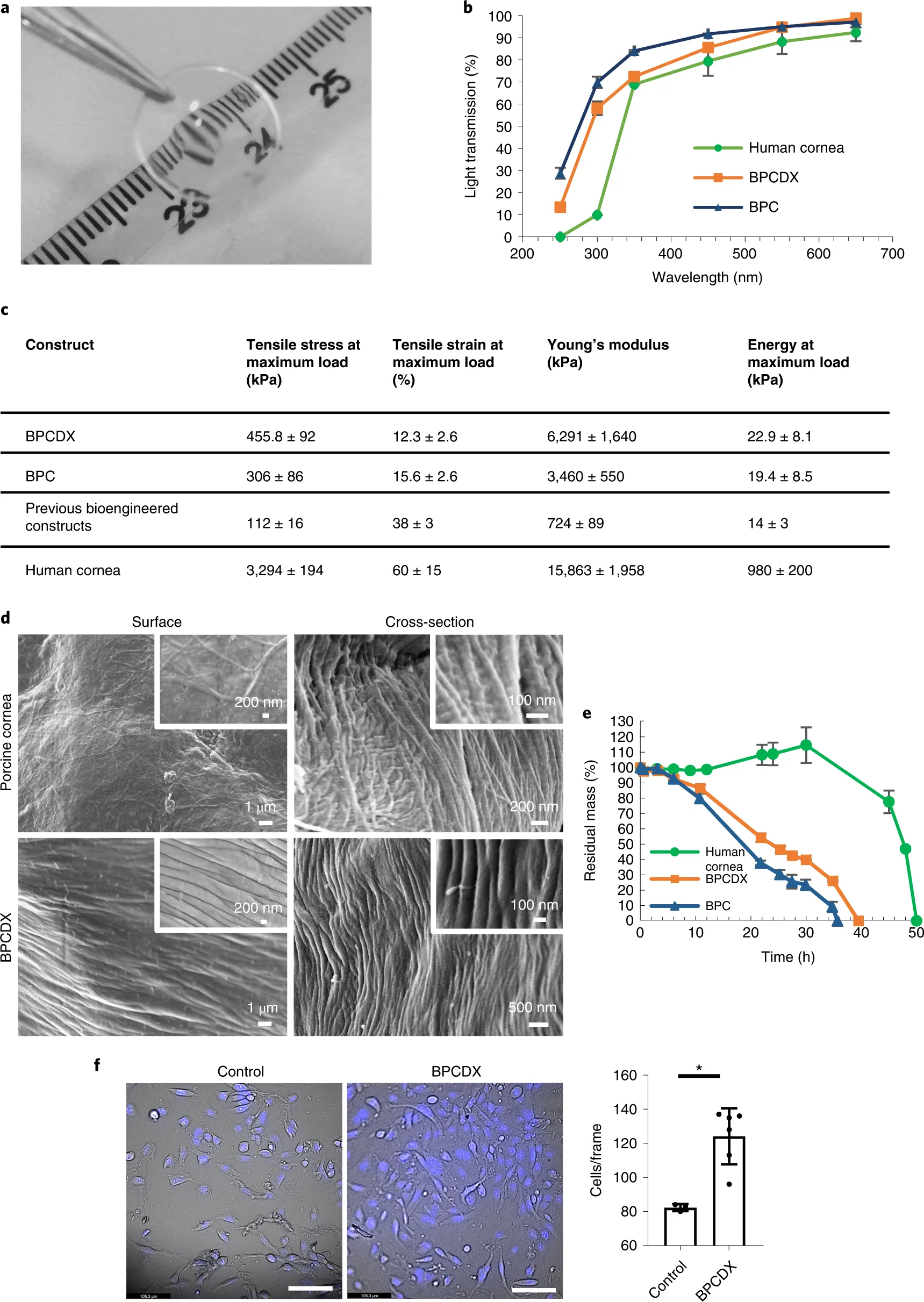
- 28. Engineering a transparent replacement: the corneal material challenge
A collagen corneal implant was tested in people with keratoconus. Why this vision research should not be confused with a treatment for macular degeneration.
Research feature · Sep 20, 2026 · 653 words
- 29. Strong enough is only the beginning for artificial cartilage
Cartilage-like hydrogels aim to combine softness with strength. Replacing a joint's working surface takes much more than a promising material test.
Research feature · Jul 23, 2026 · 664 words
- 30. Embroidered sensors turn a glove into a touch interface
Embroidered touch sensors could put controls into clothing. A study with younger adults leaves important questions about usability after 50.
Research feature · Jul 8, 2026 · 648 words
- 31. What it takes for an artificial skin to sense more than pressure
Electronic skin tries to make pressure and touch detectable by machines. Sensitivity is one test; comfort and durability are others.
Research brief · Jun 8, 2026 · 310 words
- 32. Can a sensor recover after the material is damaged?
Self-repairing sensors could make wearable electronics more durable. Repair in the laboratory is only part of the reliability question.
Research brief · Apr 29, 2026 · 310 words
Beyond Lab
- 33. Approved, cleared, registered: three different claims
FDA approved, cleared or authorised: what do these words actually tell you about a medical device, and what do they leave unanswered?
Field guide · Oct 5, 2026 · 796 words
- 34. How to read a trial record before reading the headline
A clinical trial listing is a starting point for checking a technology. Here is how to read its purpose, participants, status and results.
Field guide · Aug 22, 2026 · 840 words
- 35. Were women included—and were their results examined?
Health technology for women over 50 needs evidence that reflects its users. Start by asking who was included and how results were analysed.
Field guide · Aug 17, 2026 · 819 words
- 36. Age is more than a line in a study table
Were older adults included in the research? Age ranges, everyday health conditions and study exclusions can change what a result means for you.
Field guide · Aug 8, 2026 · 841 words
- 37. What counts as a meaningful improvement?
For assistive technology, a meaningful outcome may be joining a conversation or finishing a familiar task. A technical score is only one part of that story.
Field guide · Jul 17, 2026 · 825 words
- 38. Why a US announcement does not establish European access
A CE mark is one step in European medical device access. Availability, clinical suitability and payment remain separate questions.
Field guide · Aug 3, 2026 · 806 words
- 39. A speech interface faces the test of everyday use
A home speech brain-computer interface was studied over an extended period. Its support needs matter alongside the words it could produce.
Field guide · Oct 17, 2026 · 824 words
- 40. The device label is the start of an access question
Buying or accessing a medical device in the UK involves more than recognising a mark. The route also depends on where the device is supplied.
Field guide · Mar 17, 2026 · 813 words
Next Makers
- 41. Science Corporation and the work beyond a retinal chip
Science announced PRIMA’s European launch in July 2026. The company now faces a different challenge: turning a retinal implant into a supported clinical service.
Company profile · Jul 27, 2026 · 719 words
- 42. Synchron is taking a different route to the brain
Synchron is developing a brain-computer interface placed through a blood vessel. Less invasive access does not remove the need for clinical evidence.
Company profile · May 14, 2026 · 735 words
- 43. ONWARD and the case for stimulation outside the skin
ONWARD's spinal stimulation technologies have different uses and regulatory stages. They should not be treated as one interchangeable treatment.
Company profile · Oct 20, 2026 · 691 words
- 44. Cionic puts sensing and stimulation into clothing
Cionic's neural sleeve uses electrical stimulation to support movement. A company profile asks who it is intended for and what evidence to examine.
Company profile · Sep 11, 2026 · 735 words
- 45. Neurosoft asks how soft a brain interface should be
Neurosoft is developing soft interfaces for the nervous system. The materials story is compelling; clinical benefit needs its own evidence.
Company profile · Jun 24, 2026 · 738 words
- 46. CorNeat and the interface between an implant and the eye
CorNeat's artificial cornea remains investigational. We separate the proposed tissue interface from claims about proven, routine vision restoration.
Company profile · Jun 2, 2026 · 711 words
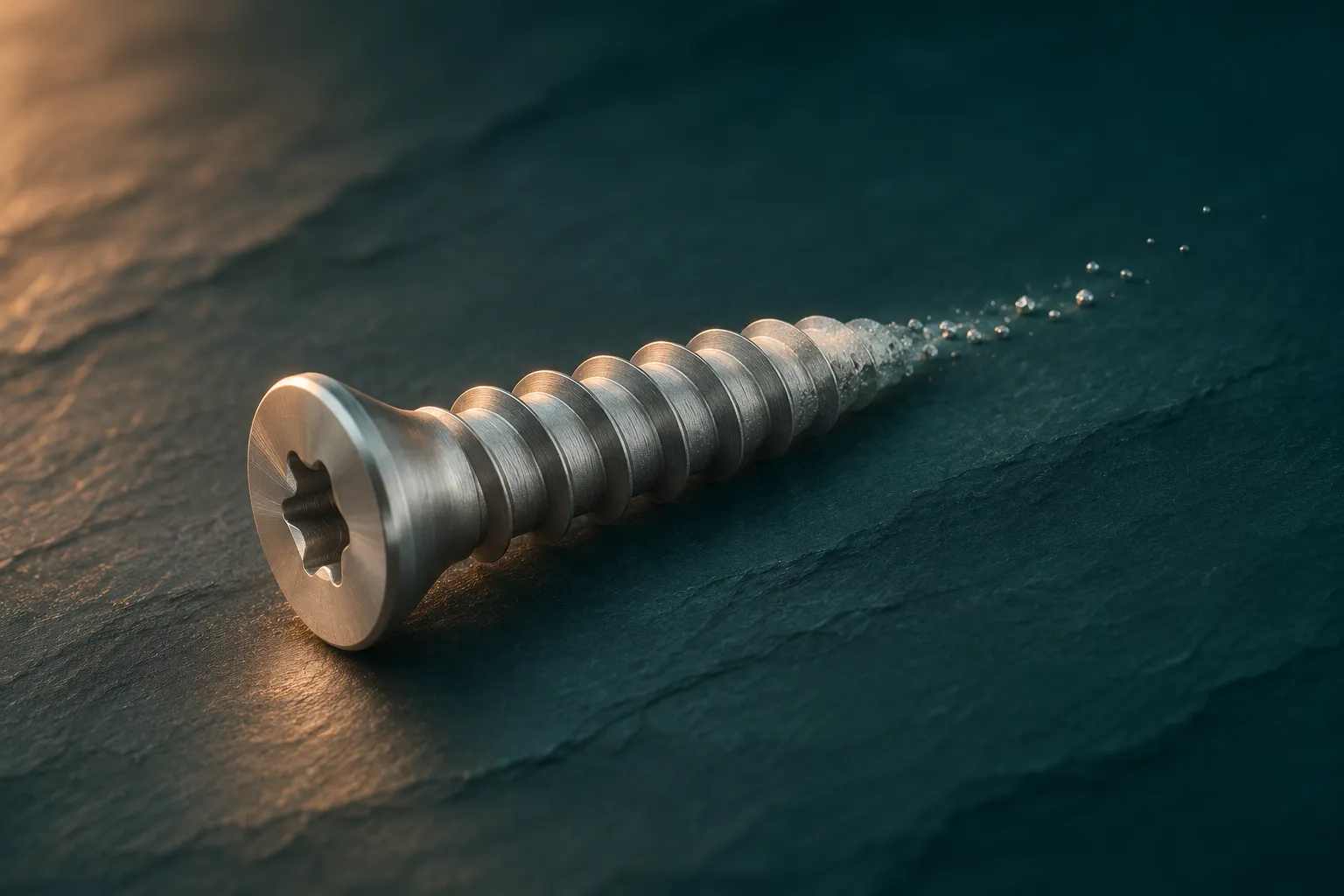
- 47. Bioretec and the idea of a metal implant that does not stay
Bioretec's absorbable metal fixation technology aims to support bone healing. A specific regulatory decision is not approval of every future application.
Company profile · Apr 4, 2026 · 735 words
- 48. Lifeward: why the intended user matters as much as the robot
Lifeward's ReWalk exoskeleton has a defined use case. Understanding eligibility and training is more useful than imagining a universal walking aid.
Company profile · Mar 29, 2026 · 711 words