





A sheet of soft material can bend with the body. The harder problem is knowing exactly how it has bent. Shape-sensing research explores whether the material itself can supply information that would otherwise require an external tracking system.
The October 2026 prototype
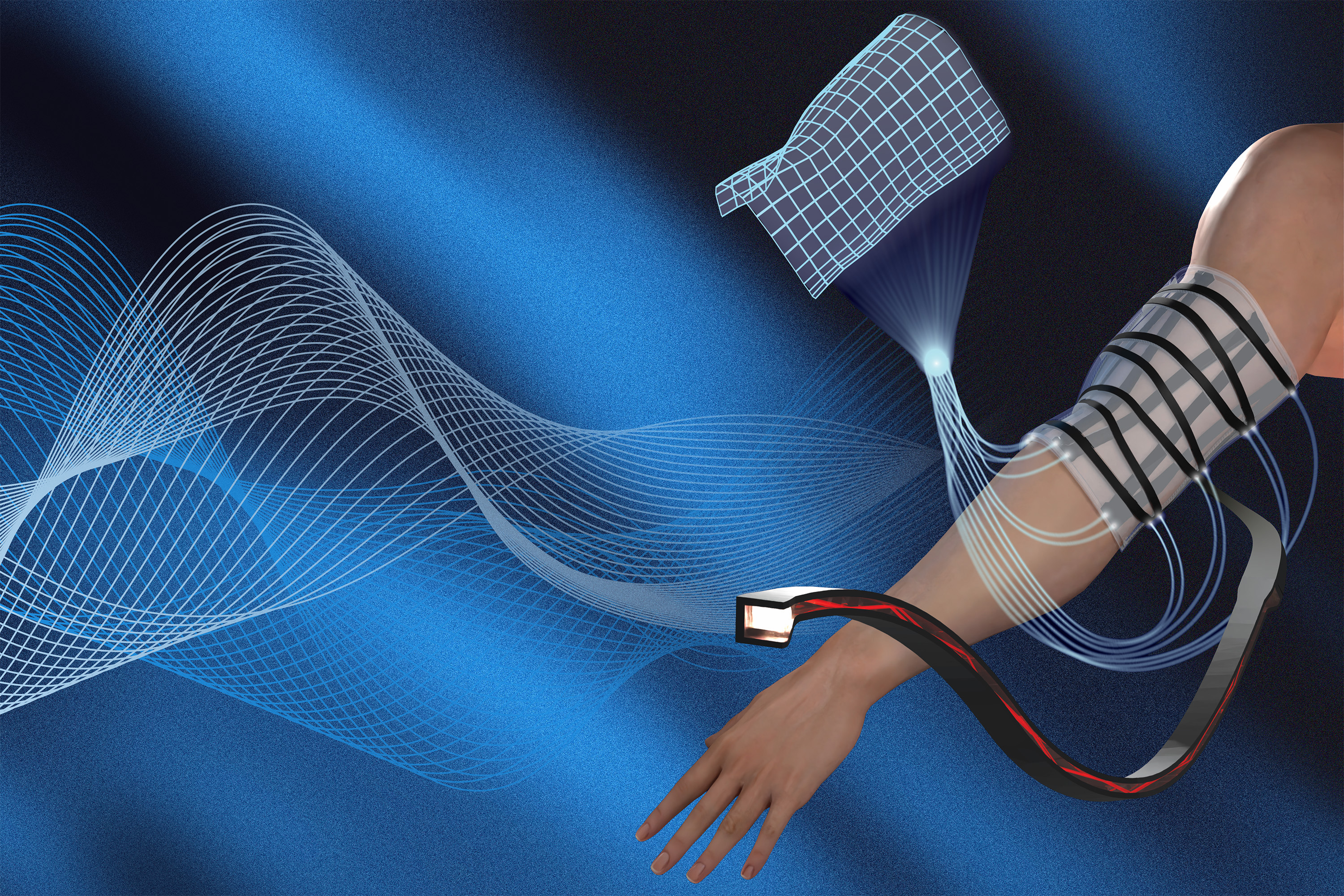
MIT reported in October 2026 on a silicone sheet containing optical waveguides (channels that guide light) arranged in a zigzag pattern. Changes in transmitted light help reconstruct bending and deformation. The research concerns a sensing platform, with external electronics still part of the setup. It does not demonstrate an approved medical monitor or a finished garment for older users. MIT News
A measurement that follows movement
For Semnal, the interesting possibility is measurement that fits around movement rather than requiring movement to fit a rigid instrument. A future application might need to distinguish the body’s motion from a fold, a loose attachment or a change in placement. Those are questions to test, not capabilities to assume.
For a woman interested in movement technology, the shape data are only the first layer. Someone must still show that the measurement answers a useful question and that the system can be worn, interpreted and maintained comfortably. Flexibility on a laboratory bench is not the same as effortless use.
Reading shape through light
A conventional picture of motion tracking often starts with a camera looking at a body. This project starts inside the material. When the sheet changes shape, the paths taken by light change too. Measurements of that transmitted light provide clues from which an algorithm reconstructs deformation. The sheet therefore acts as a distributed sensing surface rather than a single bend detector.
That distinction helps explain the appeal of the approach. A soft surface can change in more than one place at once. Knowing that it bent is less useful than estimating where and how it changed. The research asks whether the material can supply enough information to reconstruct that richer picture. It does not mean that the sheet already understands the body’s anatomy or the purpose of a movement.
A shape measurement is not a diagnosis
Suppose a future sleeve reported a different bend pattern during an arm movement. Several explanations would be possible: the arm moved differently, the sleeve shifted, or the material folded. A useful application would need a way to distinguish them. This is an engineering interpretation of the problem, not a set of failures demonstrated in the MIT work.
The same separation applies to health claims. Reconstructing a sheet’s shape does not, by itself, establish muscle strength, joint health or successful rehabilitation. Those interpretations would need validation against the question a clinician or user wants answered. A sensor is useful because it measures something reliably; a health tool additionally has to show that the measurement means what its interface says it means.
What would make this useful outside a laboratory?
A sensible next step would be a clearly defined task with a reference measurement. Can the sheet report the same movement after being removed and put back on? Can its output remain understandable when the wearer pauses or changes direction? The answers would help separate a visually appealing reconstruction from a dependable measurement tool.
For Semnal, the attraction is not the promise of a garment that knows everything about its wearer. It is the possibility of a softer way to measure a specific movement without making the person arrange their day around a rigid instrument. That would be valuable in a future rehabilitation or interaction system, provided the complete setup is manageable.
The research is best read as a component story. It adds a possible method to the designer’s toolbox. The application, its evidence and its everyday usefulness remain further steps. Keeping those steps visible makes the materials science more interesting, because it shows exactly where the next invention is needed.
From flexible sample to complete system
Durability, repeatability after repositioning and the size of the complete system will determine its practical reach. A clear next demonstration would connect the sensor to a meaningful task without overstating its clinical significance. This is a new materials-and-measurement story, not yet a home-health solution.
Research image and context
 View original image · Full resolution (3.6 MB)
MIT News research illustration showing the shape-sensing concept; supplied by the researchers and edited by MIT News. Not a photograph of a finished clinical device. Credit: Courtesy of the researchers; edited by MIT News. CC BY-NC-ND 3.0.
The idea in view
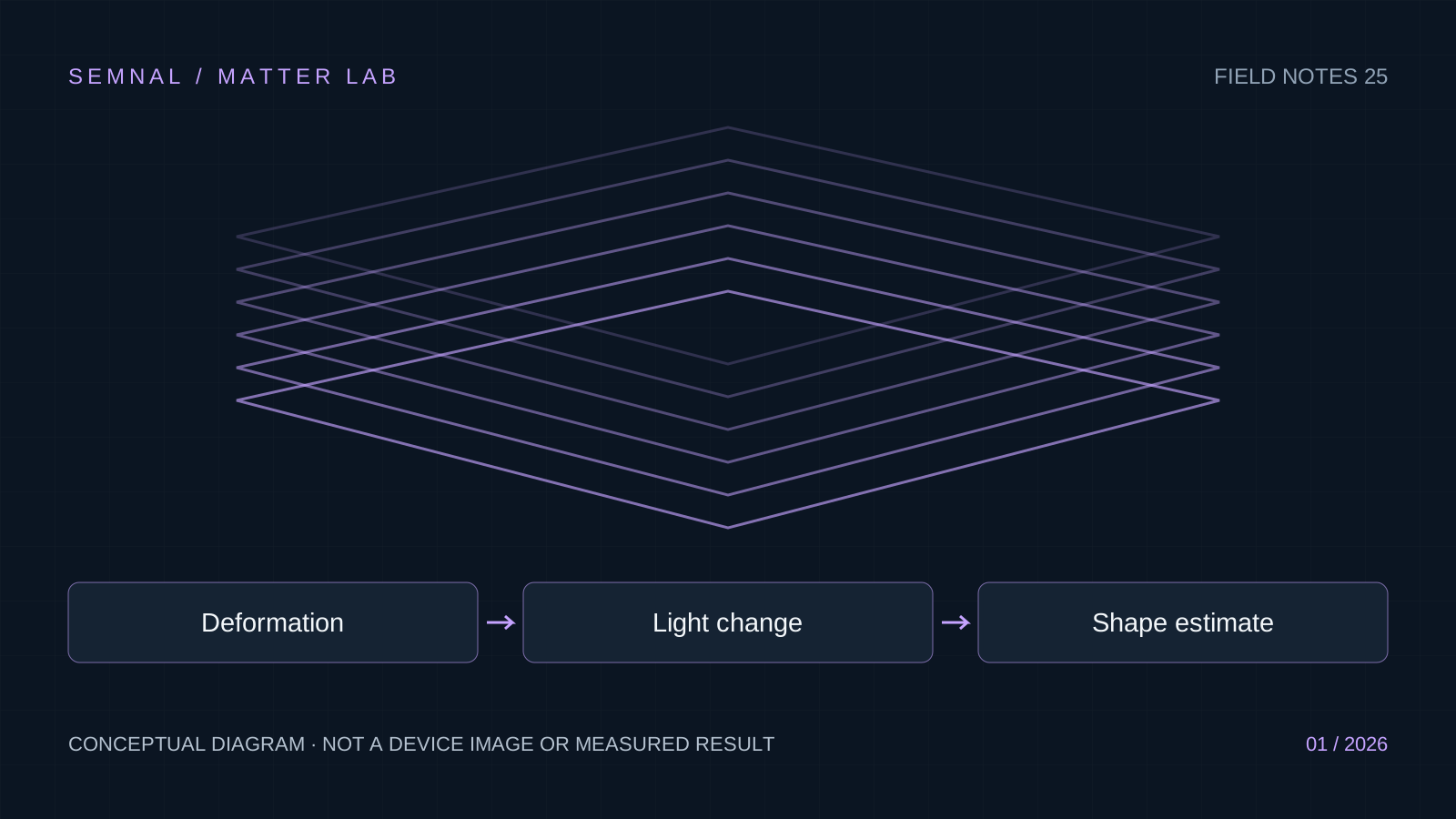
Original Semnal diagram. A simplified explanation, not a photograph of the device or a clinical result.
Sources and editorial note
Source note · 4 November 2026. Research dates refer to the original work. Prepared with AI assistance from the linked sources; no hands-on testing or interviews. Methods, disclosures and corrections.