
A damaged communication pathway invites an engineering question: could a different route carry the intention to move? A brain–spine interface offers one research answer, connecting signals associated with movement to stimulation below a spinal injury.
A research connection between intention and stimulation
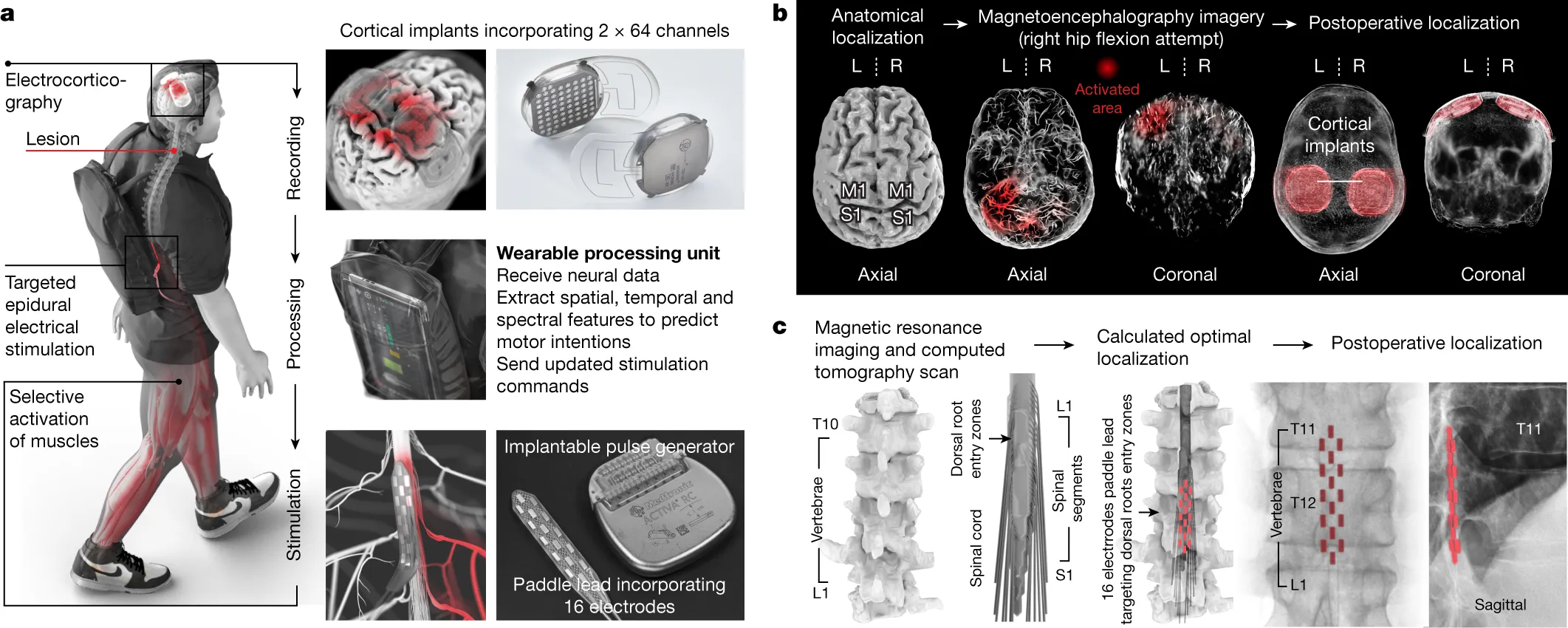
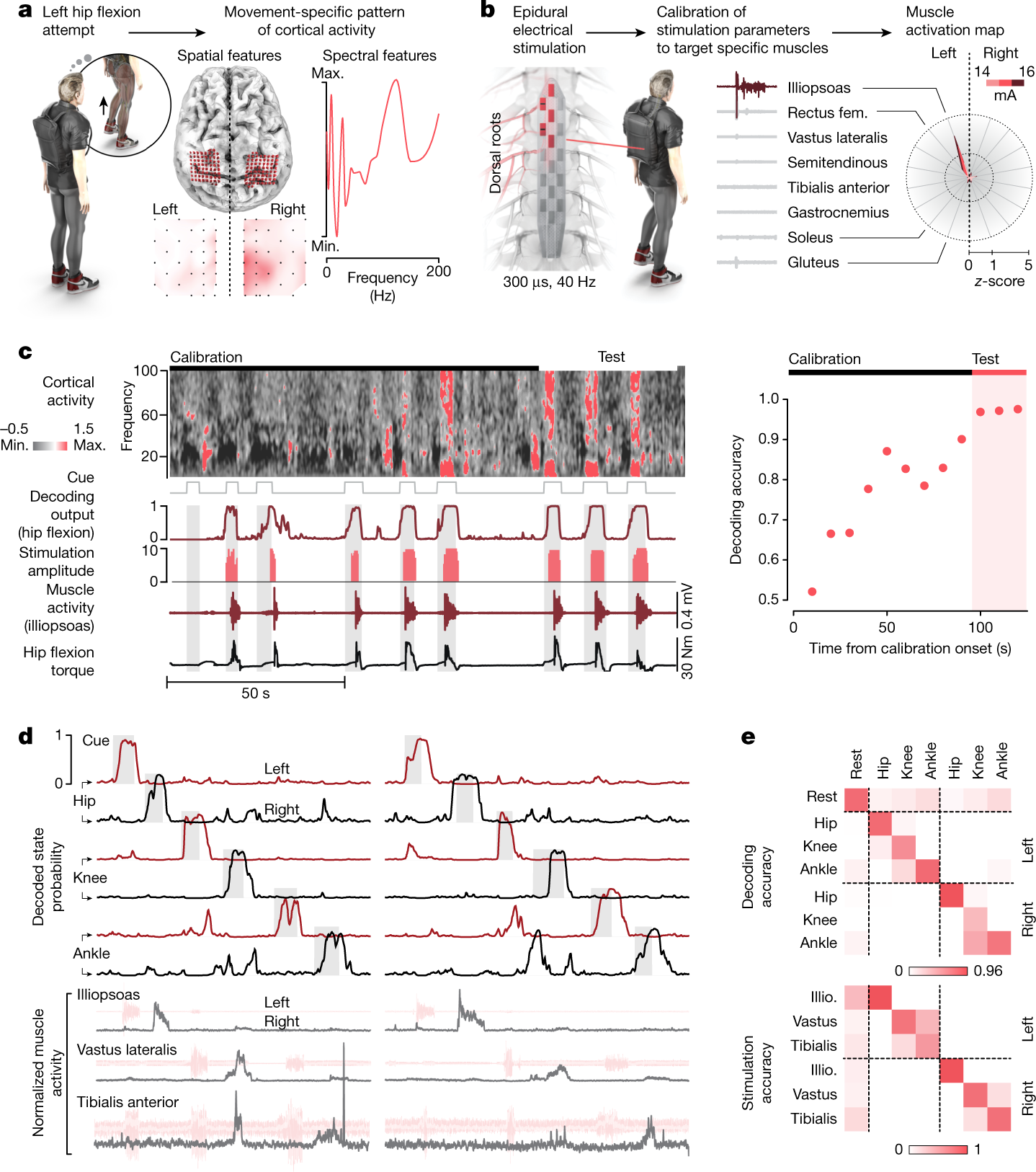
Lorach and colleagues reported a brain–spine interface in Nature in 2023. Implanted systems decoded movement intentions and used them to guide spinal-cord stimulation in a participant with chronic tetraplegia. The report describes a research demonstration involving a specific individual and extensive technical and rehabilitation support. It should not be read as a general cure for paralysis. Nature
The two ends of the system
The appealing metaphor is a bridge, but a bridge has two ends. Recording intention is one challenge; delivering useful stimulation at the right time is another. A compelling walking demonstration brings both into view without settling durability, access or the work required to use the system.
For women over 50 following mobility research, the value is understanding what has been connected and what remains to be tested. Spinal injury is not interchangeable with weakness, arthritis or ordinary changes in walking. The intended population must stay visible even when the technology is striking.
Follow the signal across the bridge
The system links two distinct operations: recording brain activity associated with an intention to move and delivering stimulation to the spinal cord. Each side needs to work, and the connection between them needs to arrive at a useful time. Calling the arrangement a digital bridge is a helpful shorthand, provided it does not obscure the implanted systems and rehabilitation surrounding it.
The intervention is therefore not equivalent to restoring every original biological connection. It creates another route through which intention can influence movement. The distinction matters when interpreting a walking demonstration: the result shows what this combined research arrangement enabled, not that every consequence of the spinal injury has disappeared.
A demonstration is the beginning of a service question
For someone watching a video, walking is the visible outcome. Less visible are setup, equipment, clinical support and the work of learning to use the system. These are not minor inconveniences to be appended after the scientific achievement. They shape whether a technology can become something a person can choose to use in daily life.
A future service would need to explain who manages the different components, how performance is checked and what happens during a problem. Those questions can be asked without assuming the answers. They are the practical route from a successful research configuration to something that can be supported outside the original team.
The field contains several different routes
Compare the brain–spine interface with ONWARD’s external stimulation programme. The latter article examines a different system and treatment context. The shared word stimulation does not make the devices equivalent, and a regulatory milestone for one cannot establish the status of another.
This comparison is useful for a reader who sees several headlines about restored movement. The first task is to identify the mechanism and the intended population. Does the system record intention, stimulate a pathway, supply mechanical assistance, or combine those functions? The answer tells us what evidence should be sought next.
The 2023 demonstration remains worth explaining because it makes the connection between intention and action unusually concrete. Its relevance is not that it offers a general solution for later-life walking difficulties. It is that it shows an engineering route around a specific interruption in communication—and makes the work needed for wider use equally visible.
Replication and support beyond one participant
The evidence to watch includes replication, reliable operation outside specialist settings, surgical risks and ongoing support. The user experience adds another dimension: not only the movements achieved, but the effort, equipment and assistance involved.
The idea in view
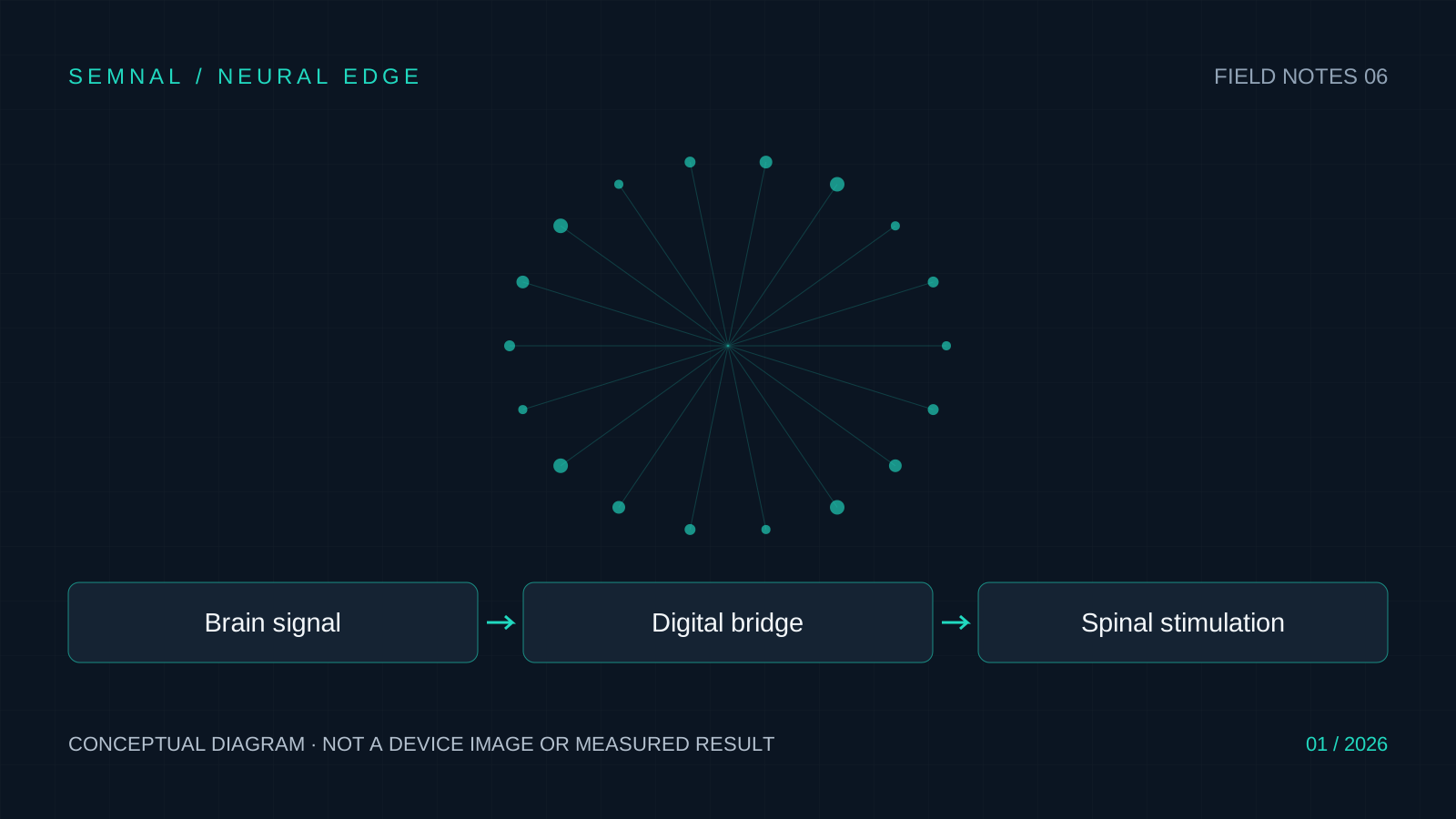
Original Semnal diagram. A simplified explanation, not a photograph of the device or a clinical result.
 View original image · Full resolution (0.7 MB)
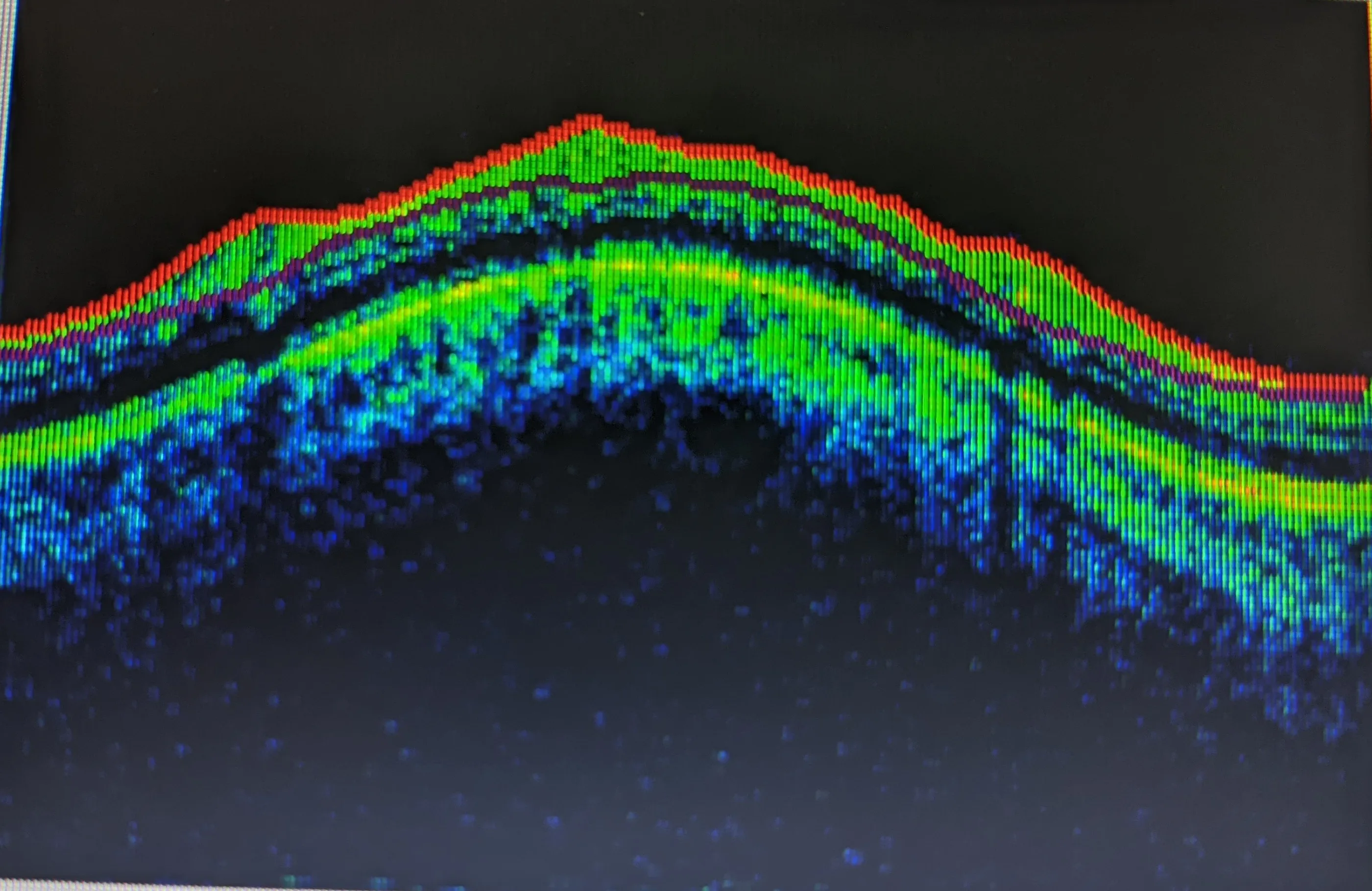
Lorach et al., original research figure, CC BY 4.0. Reproduced without content changes. See the linked paper for the complete caption and methods.
Sources and editorial note
Source note · 17 June 2026. Research dates refer to the original work. Prepared with AI assistance from the linked sources; no hands-on testing or interviews. Methods, disclosures and corrections.