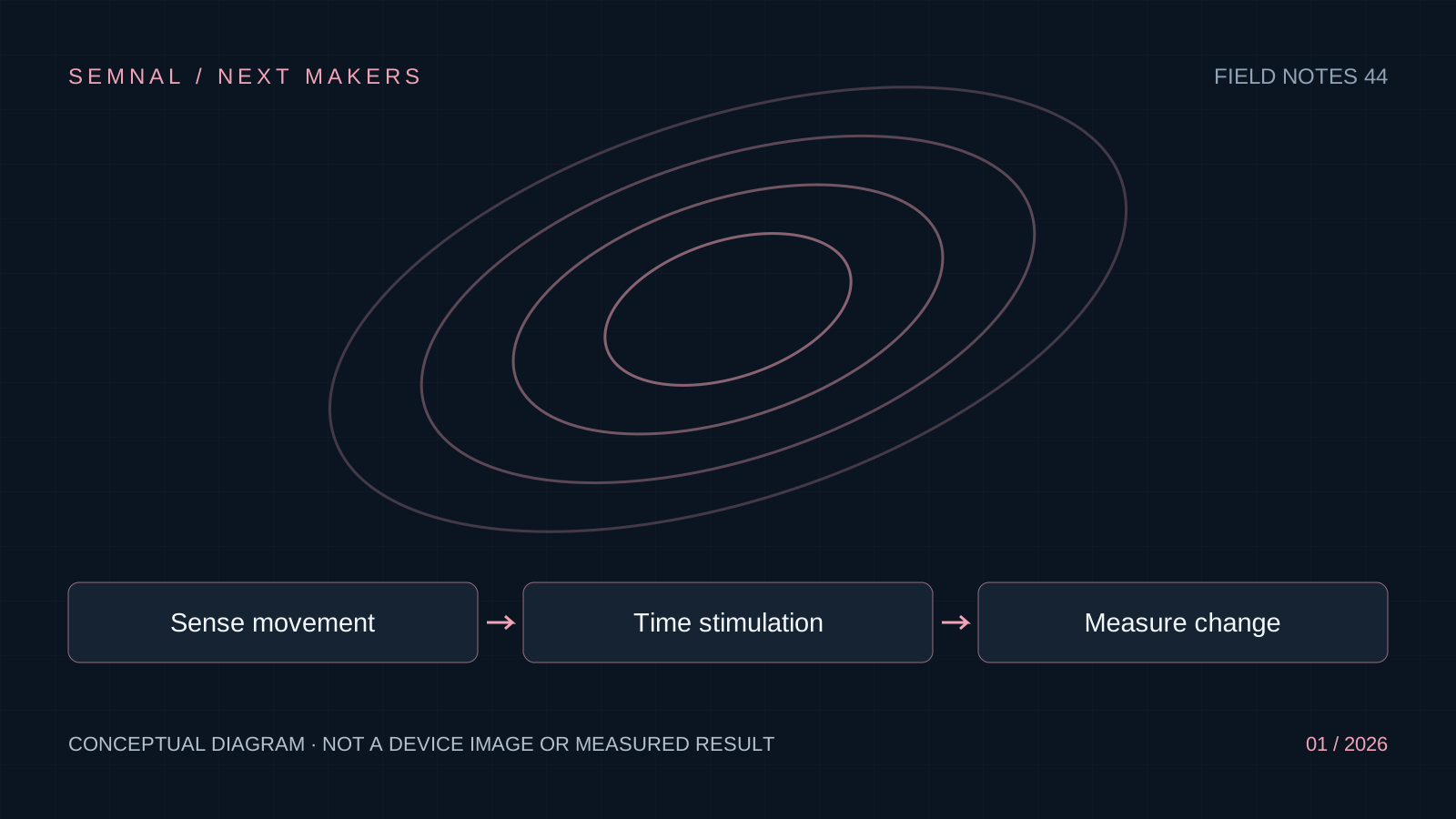


Stimulation can be applied through the skin rather than delivered by an implanted electrode. ONWARD’s ARC-EX programme makes that distinction central to a specific rehabilitation approach for arm and hand function after spinal-cord injury.
The external system and its clinical context
The 2024 Up-LIFT research examined non-invasive spinal-cord stimulation combined with rehabilitation in people with chronic incomplete tetraplegia. ONWARD describes ARC-EX as a system for that treatment context, while distinguishing its investigational implantable and BCI programmes. Its public page reports US clearance and European CE marking; local supply, funding and suitability require separate confirmation. ONWARD Medical, Nature journal
Non-invasive describes the route
The phrase ‘non-invasive’ explains how stimulation is delivered. It does not remove the need to evaluate the treatment programme, intended population or unwanted effects. The combination of stimulation and rehabilitation is the intervention to examine; the device operates within that programme.
For women over 50, this is relevant as a condition-specific development, not a general technology for weaker hands. The company’s different platforms also need to remain separate in coverage. Evidence or status for one does not automatically transfer to another carrying the same brand.
Three platform names, different evidence
The external ARC-EX system should be distinguished from ONWARD’s implantable ARC-IM and brain-interface programmes. The company’s public materials identify ARC-EX as FDA cleared and CE marked while describing the implantable and BCI programmes as investigational. Combining those statements into a single claim that ONWARD’s technology is approved would erase the distinction that matters most to a reader. Company status and intended use
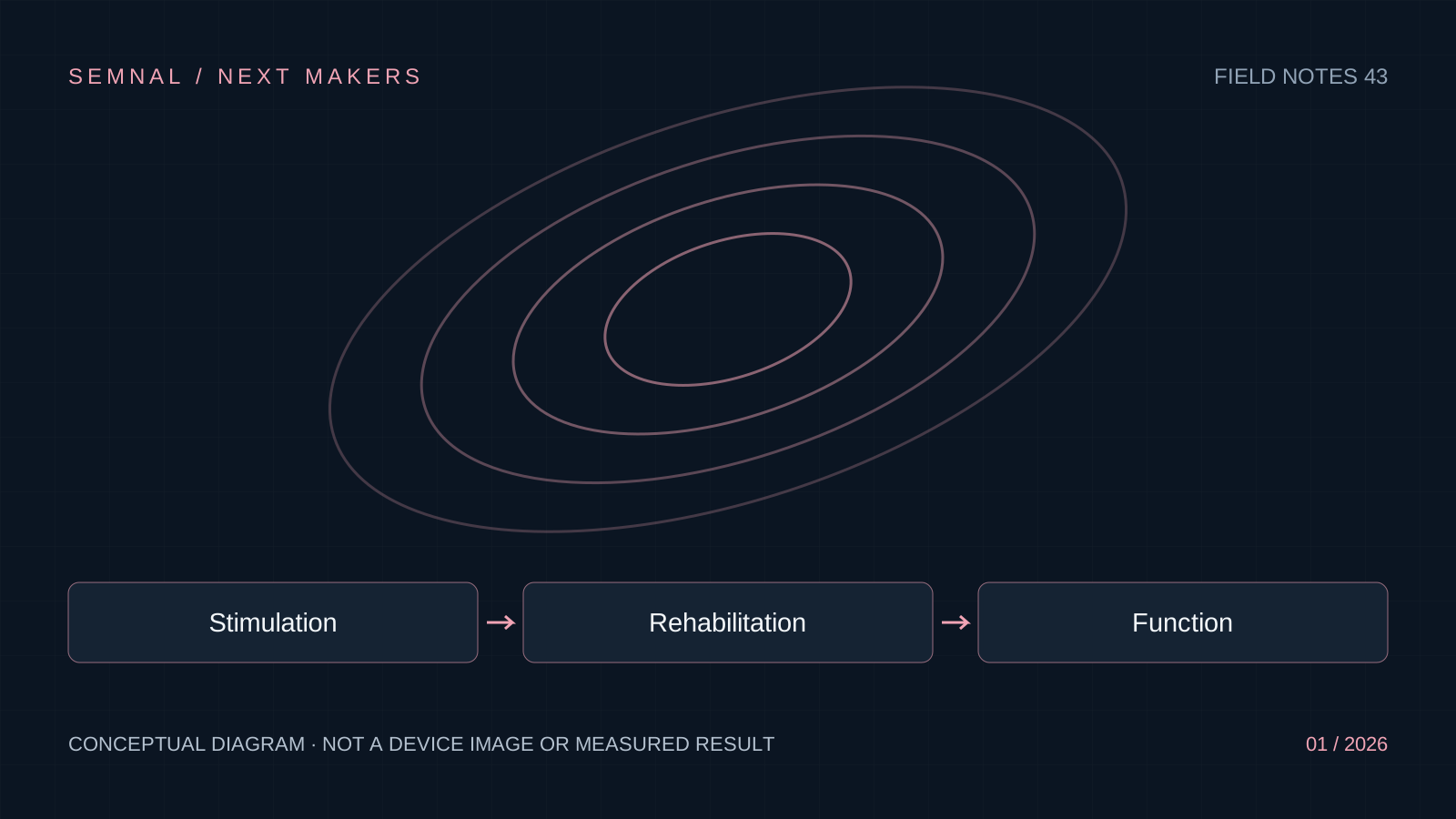
The external approach applies stimulation through skin electrodes. It is used with functional task practice, so the programme includes more than a device delivering pulses. The treatment context belongs in the same sentence as the hardware. A result from that combination should not be described as the effect of stimulation alone.
Eligibility puts a boundary around the story
The company’s current stated indication concerns a defined chronic, non-progressive neurological deficit following incomplete cervical spinal-cord injury, with an age range of 18–75. That is much narrower than hand weakness in general. A woman over 50 can be within the age range while still having a condition that falls outside the stated purpose.
This is why the article begins with the treatment target rather than an age-based recommendation. The audience is entitled to understand frontier technology without being told that every advance is designed for them personally. Relevance can come from scientific interest, family circumstances or the broader question of how rehabilitation is changing.
The practical unit is the rehabilitation arrangement
A reader assessing the field needs to know what happens around a session: who sets up the system, how practice is organised, what help is available and how progress is evaluated. These are not secondary customer-service details. They are part of whether the intervention can be delivered consistently.
The company’s materials refer to clinic use and take-home exercises. That does not make every home setting equivalent to the research setting. The move into a home changes who performs setup and who notices a problem. A useful account of home use should make those responsibilities visible rather than using independent as an all-purpose description.
What the business must prove beyond a milestone
The company has a clearer regulatory milestone for its external system than for its investigational platforms. The next editorial questions concern delivery, sustained use and whether the complete programme produces outcomes that matter to its intended users. Those questions should be supported with dated evidence, not inferred from the breadth of the product pipeline.
ONWARD is therefore a useful case study in how to read a technology company with several related programmes. The shared scientific theme creates a coherent story, but it does not make the evidence transferable between products. The strongest company profile keeps each system’s mechanism, population and status separate, then explains what connects them.
Sustained outcomes and practical delivery
Sustained outcomes, comparisons with rehabilitation alone and practical delivery are the next evidence to track. Who administers sessions, how often and with what support? Those questions help turn a company milestone into a useful account of the distance between a study and everyday access.
Sources and editorial note
Source note · 20 October 2026. Research dates refer to the original work. Prepared with AI assistance from the linked sources; no hands-on testing or interviews. Methods, disclosures and corrections.