


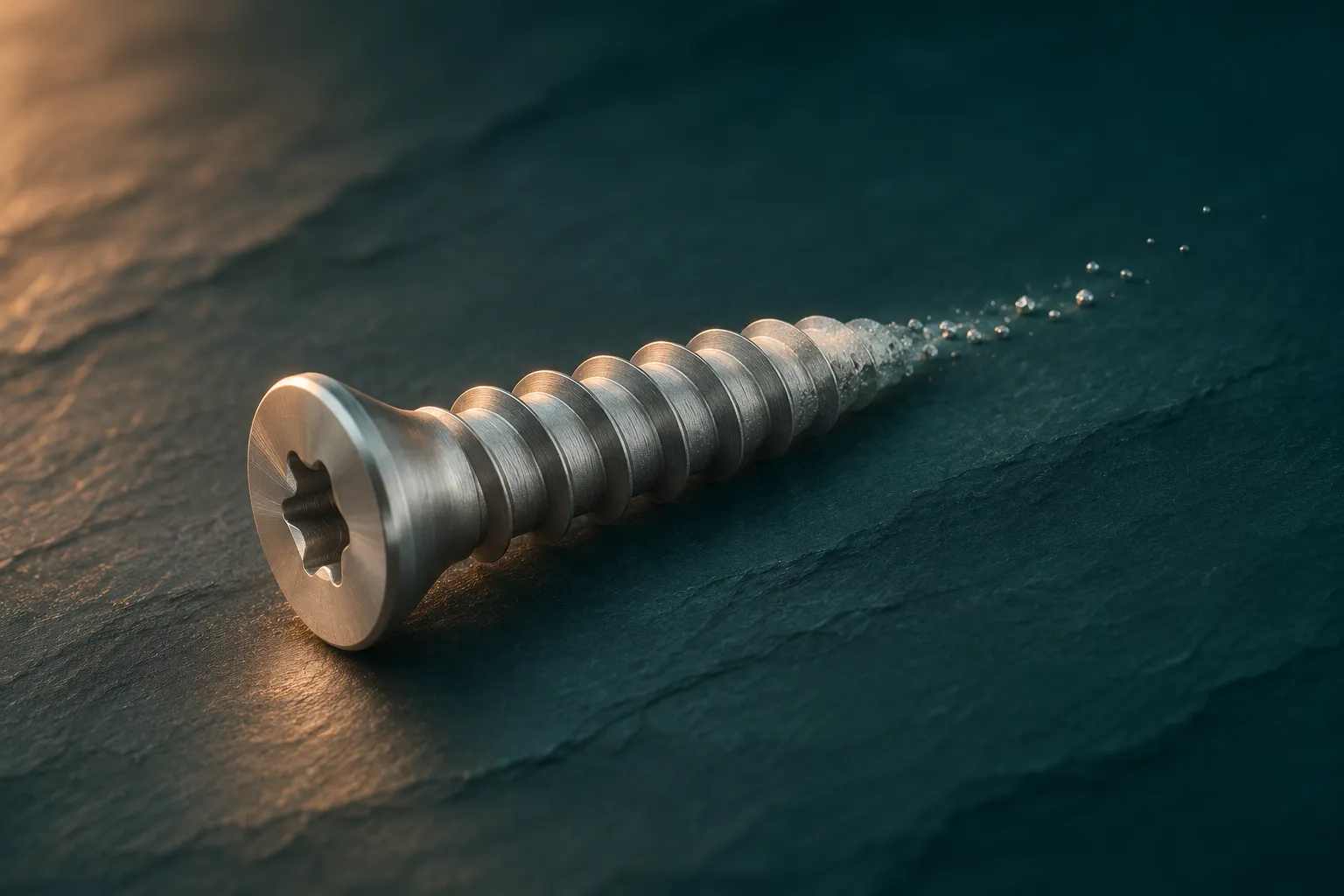
A fixation implant is usually imagined as something that stays. Bioretec’s absorbable-metal approach asks whether a device can provide temporary mechanical support and then be absorbed—a proposition that makes the timing of material behaviour central.
A specific granted De Novo decision
Bioretec describes its RemeOs platform as absorbable metallic implants. The FDA’s De Novo database records a granted decision for RemeOs Screw LAG Solid on 29 March 2023, under the classification of absorbable metallic bone fixation fasteners. That is a specific regulatory record, not a general approval of every future device using the material. Bioretec, FDA
Temporary support has to match the task
For Semnal, the engineering question is not simply whether a metal disappears. It is whether support persists for the required period and whether the complete process is appropriate for the intended use. Those claims require device-specific clinical and material evidence.
For women over 50 interested in future orthopaedic care, the technology is worth understanding without being presented as a universal alternative to conventional implants. A person’s condition, the procedure and the exact authorised use matter. We do not infer a benefit for osteoporosis or any other condition from the general idea of an absorbable screw.
The regulatory record is more specific than the platform
The FDA decision summary identifies a device for temporary fixation in skeletally mature adults and specifies fixation of the medial malleolus, the bony prominence on the inner side of the ankle. That is a much more concrete statement than saying that absorbable metal is approved for orthopaedic care in general. The indication gives the reader a boundary around the result. FDA decision summary
The same document describes benefits and risks associated with the device, including issues related to absorption, structural strength and revision. Absorbable should therefore not be used as shorthand for risk-free. The design changes the long-term behaviour of the implant; it does not remove the need to assess the complete course of treatment.
Disappearing at the right time is the challenge
The material’s job is temporary support. In conceptual terms, its behaviour has to remain compatible with the period during which support is needed. A material that changes over time creates questions about the rate of that change and its consequences, not simply whether it eventually disappears.
This makes the company interesting as a materials story. The value proposition depends on a relationship between mechanical performance and biological healing, rather than on maximum strength alone. That relationship has to be demonstrated for the actual device and intended use. A platform description cannot answer it for every future screw, plate or anatomical location.
A useful distinction for readers interested in bone health
Fixing a fracture and treating an underlying condition that affects bone are different goals. A regulatory decision about a fixation device should not be presented as evidence that it treats osteoporosis or prevents future fractures. Those are separate questions with separate interventions and evidence.
For women over 50, that distinction protects the relevance of the article. There is a real reason to understand new orthopaedic materials, but the connection should come through a specific procedure and purpose. Age or interest in bone health is not enough to establish that a particular implant is appropriate.
What would justify a broader company claim?
A broader claim would need evidence for each additional device and use, including the relevant clinical results and regulatory record. The company may have ambitions beyond the product considered in the FDA decision, but those ambitions should be labelled as development plans until the supporting milestones exist.
For an independent publication, the most informative follow-up would examine longer-term outcomes, revision experience and how surgeons select the device within its stated purpose. Those details would show whether the materials proposition remains useful through the complete treatment pathway.
Bioretec’s story is therefore not simply metal that vanishes. It is the attempt to make a temporary mechanical role compatible with a changing biological environment. The specific FDA record provides a firmer starting point than a generic claim about the future of implants, while leaving room to examine what subsequent products actually establish.
The evidence required for each additional use
The next milestones to track are longer-term clinical outcomes and device-specific evidence for additional products. Manufacturer language about a platform can be broader than the scope of a regulatory decision. Keeping the two separate makes a company profile more useful than a retelling of its market ambitions.
Sources and editorial note
- Bioretec — manufacturer business and product overview
- FDA — device decision and review documentation
Source note · 4 April 2026. Research dates refer to the original work. Prepared with AI assistance from the linked sources; no hands-on testing or interviews. Methods, disclosures and corrections.