


A speech interface becomes a different proposition when it works at home. The question moves beyond whether a decoder can produce words to whether the person can use it when they choose, with manageable support.
One participant, extended home use
NIH described a 2026 Nature Medicine study following a man with ALS using an implanted speech and cursor-control system at home. He was 45 when home testing began. Researchers initially visited regularly, then trained caregivers to set up the equipment. The account reports more than 3,800 hours of use over almost 23 months. This is substantial experience in one person, not a multi-person demonstration of general readiness. NIH
Setup and autonomy are different layers
The support story is part of the scientific story. Independent communication after setup is different from independently maintaining every part of the system. Both can be valuable, but they should not be collapsed into a single claim of autonomy.
For women over 50, this case offers a concrete view of what translation out of the laboratory entails. It does not directly establish performance for them. Setup assistance, interruptions and error correction are central to keeping the user in control of the conversation.
What a broader study should preserve
The next evidence should include more participants, durable equipment and clear accounts of support time. Long use in one home makes the research more tangible; reliable use across different homes and people would answer a broader question. We follow that distinction rather than treating a powerful personal story as a universal result.
The most important number may describe time
A short demonstration can show that a decoder works. More than 3,800 hours of use over almost 23 months addresses another question: whether a person can keep using a system through ordinary communication needs. The duration makes this a valuable case study even though the participant count remains one.
The NIH account describes use for in-person conversation, video calls, email and text. It also reports that the participant could rate and correct statements through the interface. Those details bring the system closer to the texture of everyday communication, where an imperfect sentence needs a response rather than merely an accuracy score. NIH report, July 2026
Independence has several layers
The account describes regular researcher visits early in the study, followed by training caregivers to set up the equipment. Independent use after setup is a meaningful achievement, but it is not the same as independently installing, maintaining and troubleshooting every component. A clear article should specify which layer of independence is being discussed.
This matters for future home technologies more generally. Moving a device out of a laboratory does not make the surrounding work disappear. It changes who performs that work. A useful evaluation should record the support arrangement alongside the hours of use, so that the result can be interpreted as a complete experience.
Errors are part of communication, not just a score
The NIH report says the participant rated 79% of more than 180,000 sentences as correct or mostly correct and could correct 13%. These are participant-rated outcomes in this study. They should not be rewritten as a universal clinical accuracy rate or silently combined into a different performance claim.
The distinction between producing and correcting a sentence is particularly important. A system that allows a person to reject an output may preserve control even when decoding is imperfect. An account that reports only the best accuracy figure can miss that part of the interface. The opportunity to correct is part of speaking on one’s own terms.
A useful model for evaluating other home systems
This case suggests a set of questions that can be applied to other assistive technologies: how often was the system used, for which activities, with whose help, and what happened when it did not work as intended? The questions are useful because they focus on repeated use rather than on the most successful demonstration.
They also separate access to a capability from the freedom to choose when to use it. A communication system becomes more valuable when it can be used at the moment a person needs to say something, not only when a research team is present. That is a practical milestone even before broad availability is established.
What remains specific to this participant
The participant was 45 when home testing began and had ALS. His experience cannot establish outcomes for every older woman with a communication difficulty. The point of including the story is to understand a pathway towards sustained communication, not to use one person as a stand-in for the entire audience.
The next persuasive evidence would test that pathway across more people and support arrangements. It would retain the detailed account of setup, errors and use rather than replacing it with a single average. The frontier here is not merely a machine producing words. It is a person gaining a more practical opportunity to decide when and how to communicate.
Research image and context
 View original image · Full resolution (1.2 MB)
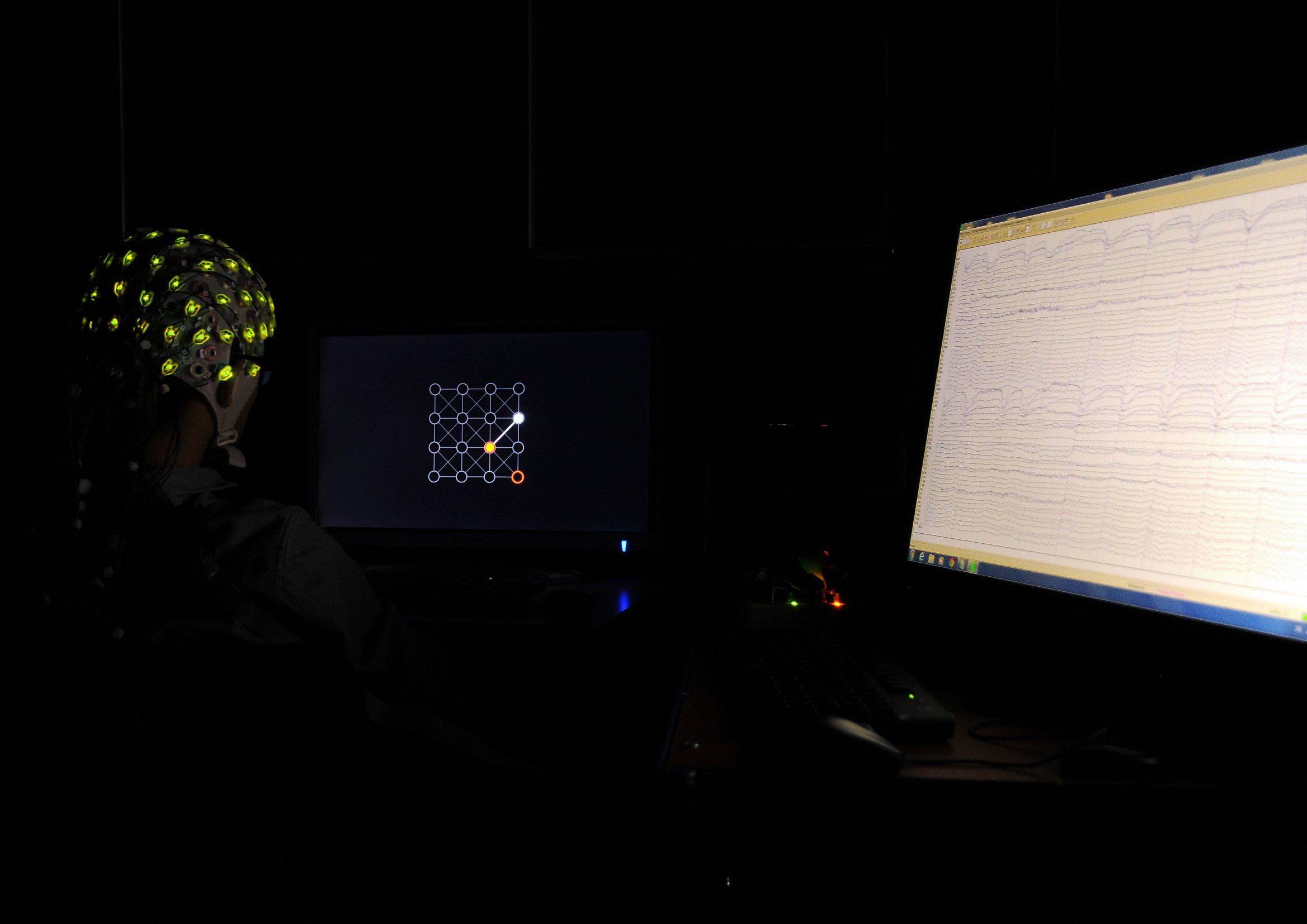
Context photograph of an EEG-based computer-control experiment. It is not the implanted system or home-study participant discussed in this article. Brain-computer interface experiment. The participant (left) is wearing an EEG cap. Their brain activity (right) is recorded and interpreted in real time to steer a cursor on the screen (middle). Context photograph; not the featured study or product unless explicitly identified. Credit: Laurens R. Krol. CC BY 4.0.
The idea in view
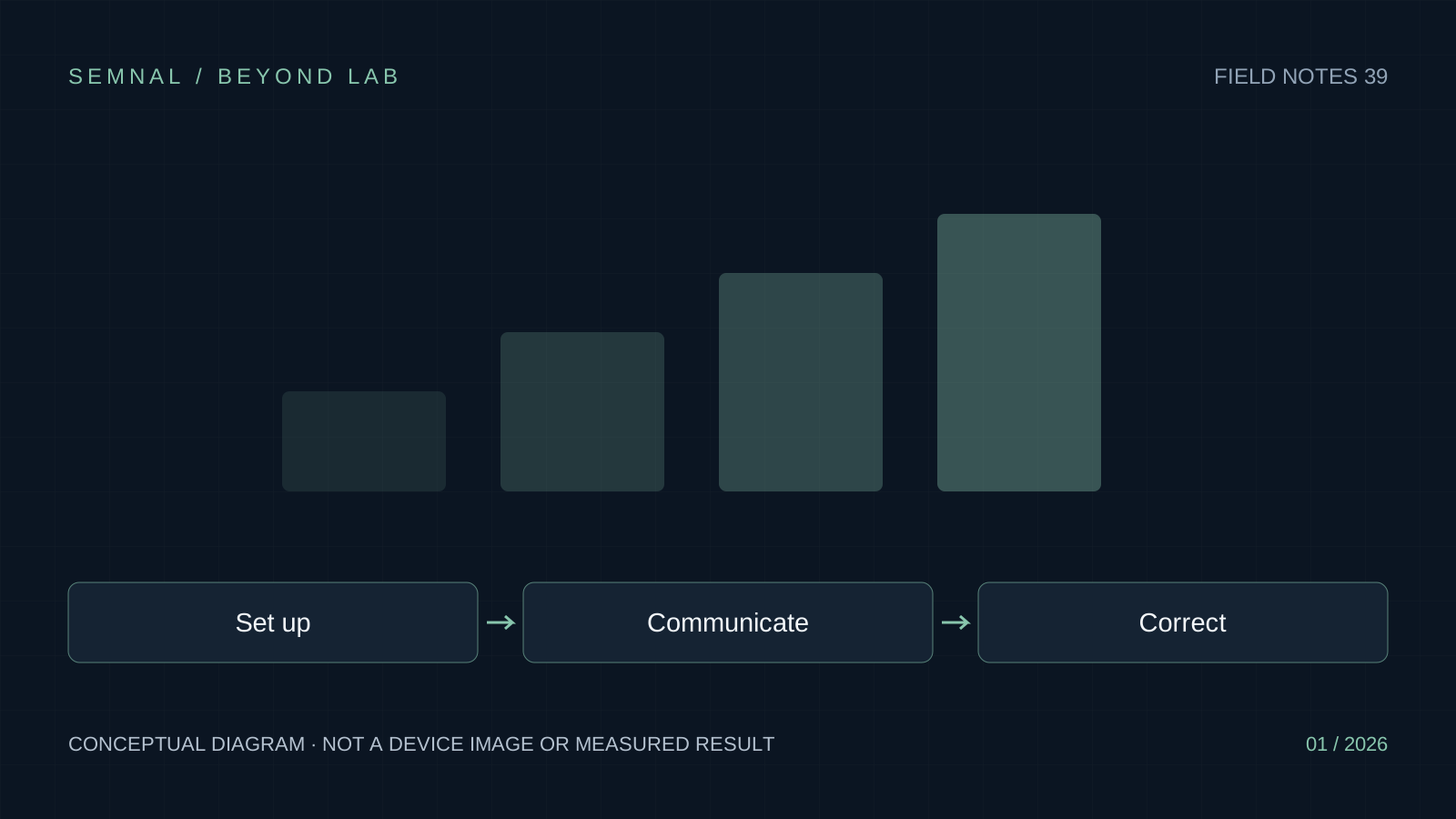
Original Semnal diagram. A simplified explanation, not a photograph of the device or a clinical result.
Sources and editorial note
Source note · 17 October 2026. Research dates refer to the original work. Prepared with AI assistance from the linked sources; no hands-on testing or interviews. Methods, disclosures and corrections.