



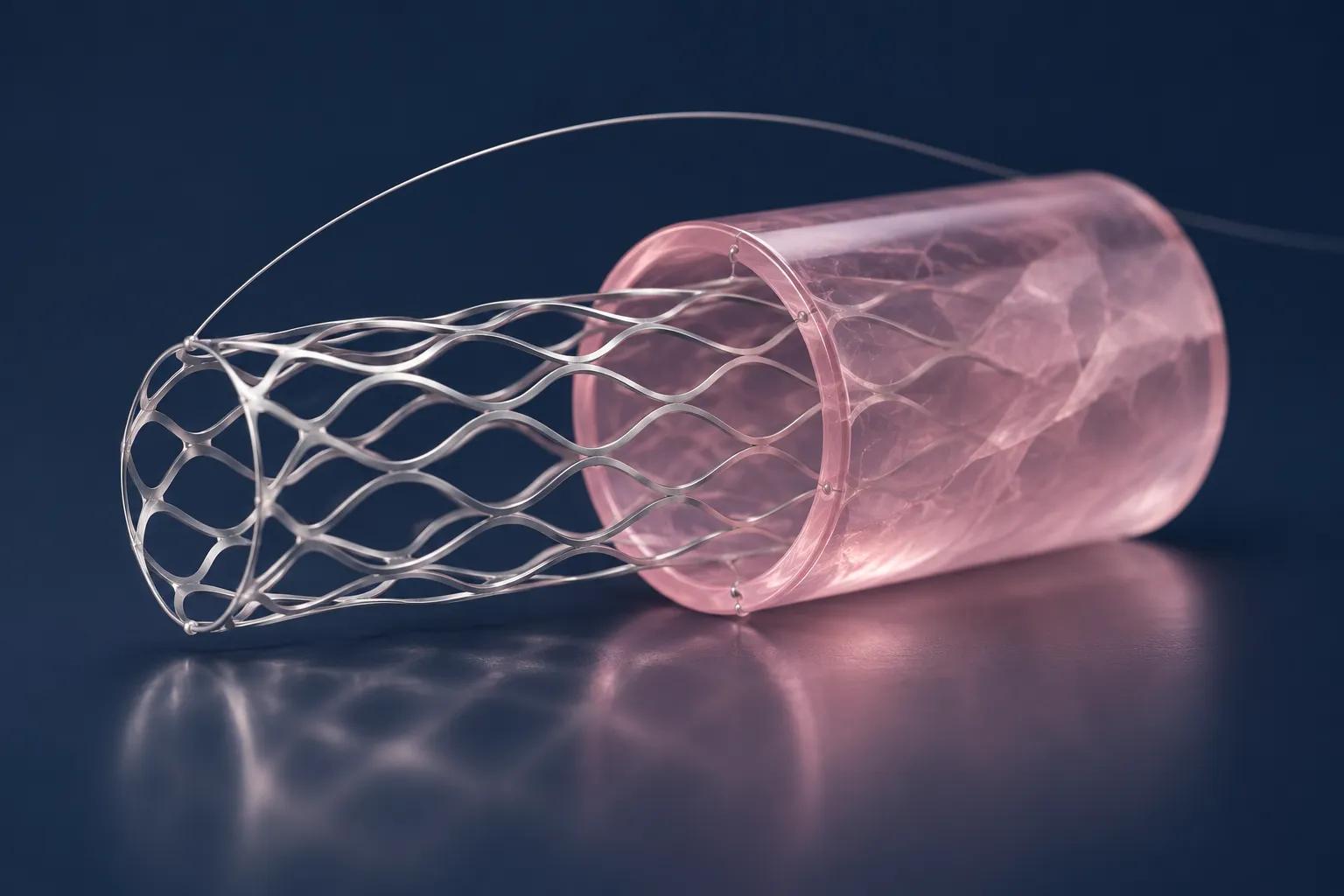
Brain interfaces do not all reach neural signals in the same way. Synchron is developing an approach through blood vessels, making the route of implantation part of its technical proposition rather than a detail behind the headline.
What the public materials actually establish
A January 2026 Synchron presentation hosted by the ALS Association describes its brain–computer interface approach for people with ALS. The material identifies the device as investigational and limited to approved clinical-trial use. It presents an endovascular (through a blood vessel) route to recording brain activity and using it for digital interaction. See also Synchron’s current technology description. This is company educational material, not an independent comparison with other interfaces. ALS Association presentation
Digital control is a meaningful target
The route raises useful questions about the balance between access to signals, implantation and long-term operation. ‘Different route’ should not be translated into ‘risk-free’ or ‘equally suitable for everyone’. Those conclusions would require evidence beyond a description of the design.
For Semnal readers, digital control is a meaningful target in its own right. Communicating, selecting and interacting with a computer can matter even when a system does not directly reconstruct a spoken voice. The intended tasks provide a more useful benchmark than a science-fiction image of a brain interface.
The route is the proposition, not the whole outcome
Synchron’s Stentrode records signals from a position inside a blood vessel. Its technical proposition therefore includes how the interface reaches the relevant brain activity, rather than only the software used to interpret it. That distinguishes the approach from interfaces placed through other surgical routes, but it does not establish that one route is best for every person or every task.
The company’s technology page continues to identify the system as investigational and not approved for commercial use. Its examples of digital interaction explain the intended direction of development; they should not be read as a retail feature list. A website demonstration and a validated clinical benefit are different kinds of evidence. Technology and status
Start with the task a person wants to complete
Selecting a message, browsing a page and producing continuous speech are not the same objective. A digital-control interface can be useful without generating a natural voice. Conversely, an impressive speech demonstration does not establish that a person can manage all the other tasks involved in using a computer.
For a woman following the field, the most informative comparison begins with an activity: communicate a choice, correct an error, navigate a screen or join a call. It then asks what support the system requires. This keeps the discussion grounded in agency rather than in a contest over which company appears closest to reading the mind.
A research list is a route into evidence
Synchron publishes a research index that distinguishes peer-reviewed papers from preprints. It includes a 2023 safety assessment involving four patients and work on signals, anatomy and user autonomy. The index is useful for locating the evidence, but it is still curated by the company. Each paper needs to be read for its own population, purpose and limits. Research index
A safety study is not interchangeable with a study of everyday communication. A signal-analysis paper is not proof of an independent home routine. Reading the list this way prevents a long bibliography from becoming an undifferentiated claim that the complete service is already established.
What would make the next milestone meaningful?
The strongest next account would describe what participants could do, how often they used the system and what assistance remained necessary. It would also report errors, interruptions and adverse events alongside successful interactions. Those details help readers understand the total experience rather than only the best moment in a demonstration.
The company story is compelling because it explores another route to digital control for people with severe movement limitations. The unresolved work concerns sustained benefit, safety and a supportable pathway beyond the trial. Following that work does not require predicting a launch date or declaring a winner among competing interfaces. It requires keeping the intended task and the participant’s control at the centre of the evidence.
What to follow after a demonstration
The next things to follow are trial results, adverse-event reporting, support requirements and the experience of users over time. Evidence involving women over 50 should be reported explicitly when available. A company presentation can explain an ambition; the clinical record must establish how far that ambition has progressed.
Sources and editorial note
Source note · 14 May 2026. Research dates refer to the original work. Prepared with AI assistance from the linked sources; no hands-on testing or interviews. Methods, disclosures and corrections.