

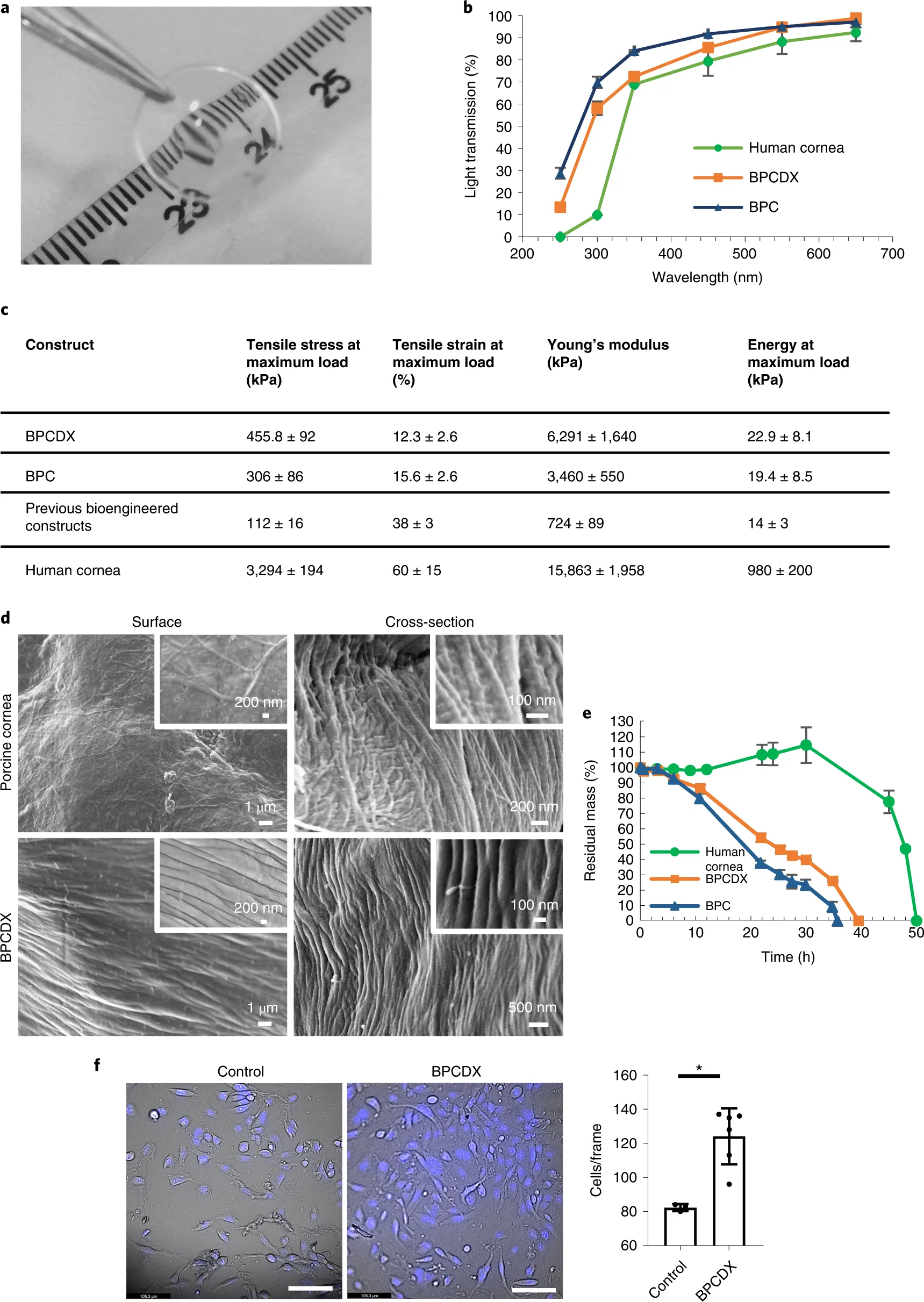



The cornea must do several jobs at once: transmit light, maintain shape and remain compatible with surrounding tissue. A replacement material therefore faces a more demanding brief than simply being transparent.
A twenty-person pilot for keratoconus
A 2022 Nature Biotechnology paper reported a bioengineered, double-crosslinked porcine-collagen construct implanted in 20 people with advanced keratoconus in India and Iran. Keratoconus makes the cornea thinner and changes its shape. The procedure reshaped the cornea without removing the existing tissue, and the report followed participants for 24 months. This pilot concerns corneal disease; it is not a treatment study for age-related macular degeneration. Nature Biotechnology
Why the anatomy changes the meaning
That anatomical distinction is central. The cornea sits at the front of the eye; retinal technologies operate elsewhere. Both may be described as restoring vision, yet the conditions, procedures and evidence are different. A reader should not have to discover that distinction only after following a dramatic headline.
For women over 50, this is an important materials story without being a claim of age-specific suitability. Participant characteristics, visual measurements and any additional correction determine how to interpret the result. The origin and manufacture of the material also deserve clear explanation, including the use of animal-derived collagen.
Two different parts of the eye, two different stories
The cornea is the transparent front surface of the eye. The retina is the light-sensitive tissue at the back. An intervention that reshapes a damaged cornea and an implant that stimulates surviving retinal pathways are addressing different problems. The shared phrase restoring vision can make that distinction disappear unless the article states it early.
That is why this material study should be read separately from the PRIMA retinal implant. The research populations, procedures and intended mechanisms differ. A reader cannot infer suitability for one condition from success reported in another, even when both technologies involve an implant and an improvement in measured sight.
The material is only one part of the intervention
The paper describes a construct made from porcine collagen. Explaining the animal-derived material is part of informed reporting, not an optional manufacturing detail. A reader may want to understand both the clinical proposition and the origin of what is implanted. The study also concerns how that material is used in a procedure, rather than a material being tested in isolation.
The twenty-person pilot and its twenty-four-month follow-up provide a defined body of evidence. They should be described as such, without silently turning a promising pilot into a routine treatment pathway. A larger comparative study would answer a different question from a feasibility demonstration: how the approach performs against relevant alternatives in a broader group.
What does an improvement allow someone to do?
A measured visual change becomes more informative when the conditions of testing are clear. Was additional optical correction used? What task was performed? How long after the procedure was the measurement made? These are questions to read alongside the numerical result, because the complete visual experience includes more than the implanted material.
For a woman interested in future vision care, the value of this story is understanding a particular route through biomaterials research. It does not require assuming she has the studied condition. Scientific curiosity is a sufficient reason to read it; personal treatment relevance requires a much narrower match.
The strongest interpretation is that the work explores an engineered way to reshape a specific diseased cornea while preserving existing tissue. The next evidence should clarify reproducibility, comparative outcomes, complications and access. A clear account of those steps gives the reader something more useful than a headline suggesting that a synthetic material can replace sight in general.
The questions after a promising pilot
Larger comparative studies, longer-term performance and current regulatory access remain separate questions from a successful pilot. Manufacturing and delivery will also need to support consistent use. The achievement is an engineered approach to a specific corneal problem, not a universal replacement for sight.
The idea in view
Original Semnal diagram. A simplified explanation, not a photograph of the device or a clinical result.
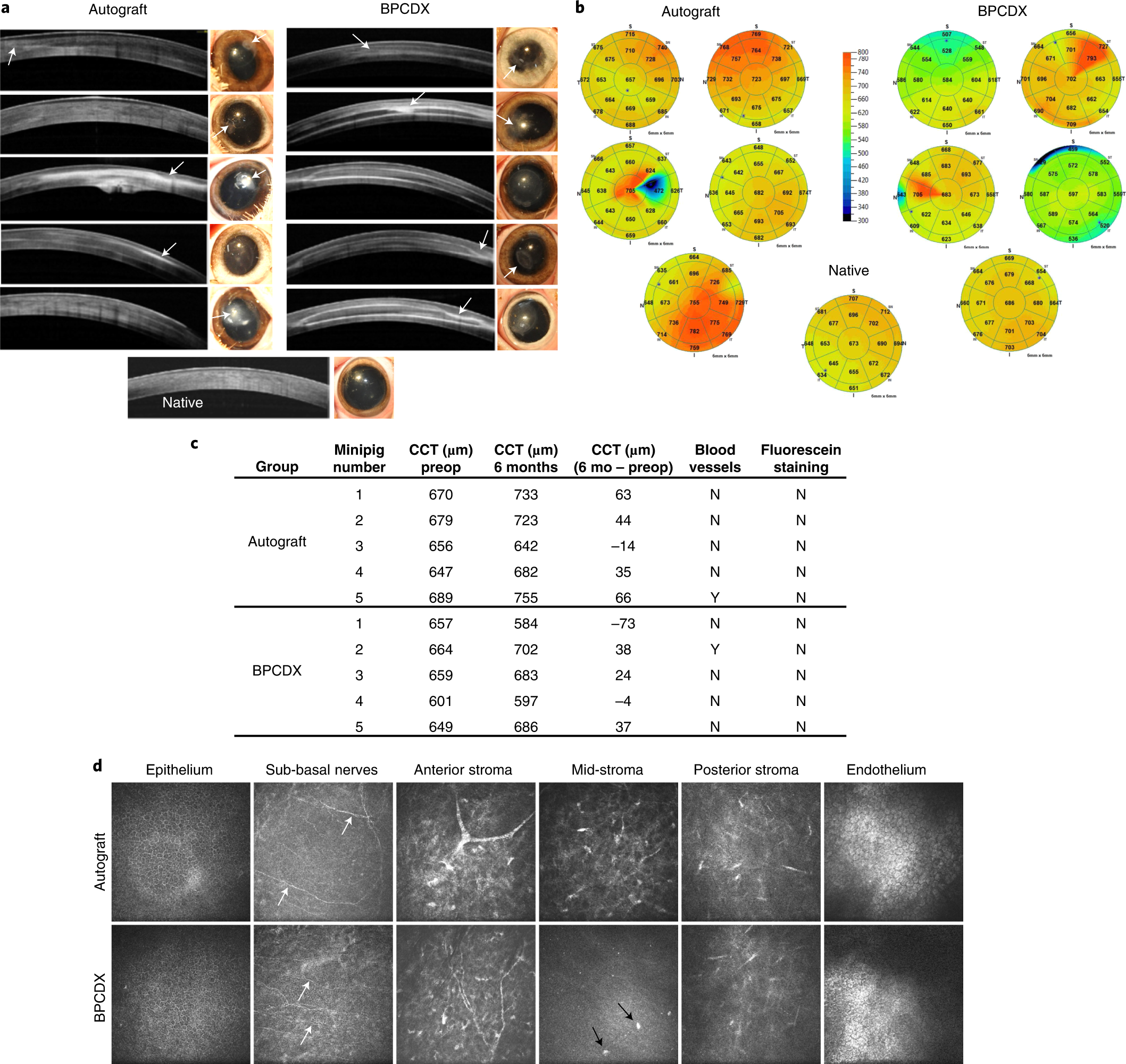 View original image · Full resolution (2.1 MB)
Rafat et al., original research figure, CC BY 4.0. Reproduced without content changes. See the linked paper for the complete caption and methods.
Sources and editorial note
Source note · 20 September 2026. Research dates refer to the original work. Prepared with AI assistance from the linked sources; no hands-on testing or interviews. Methods, disclosures and corrections.