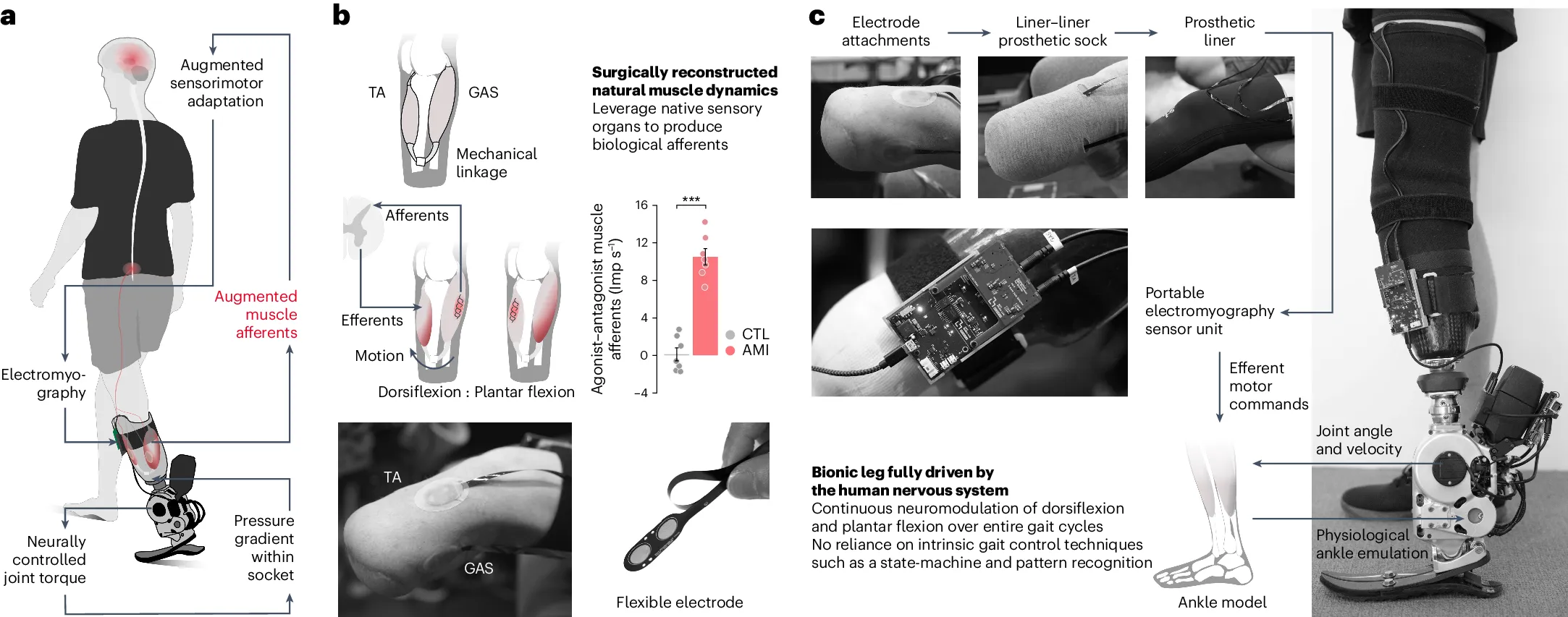


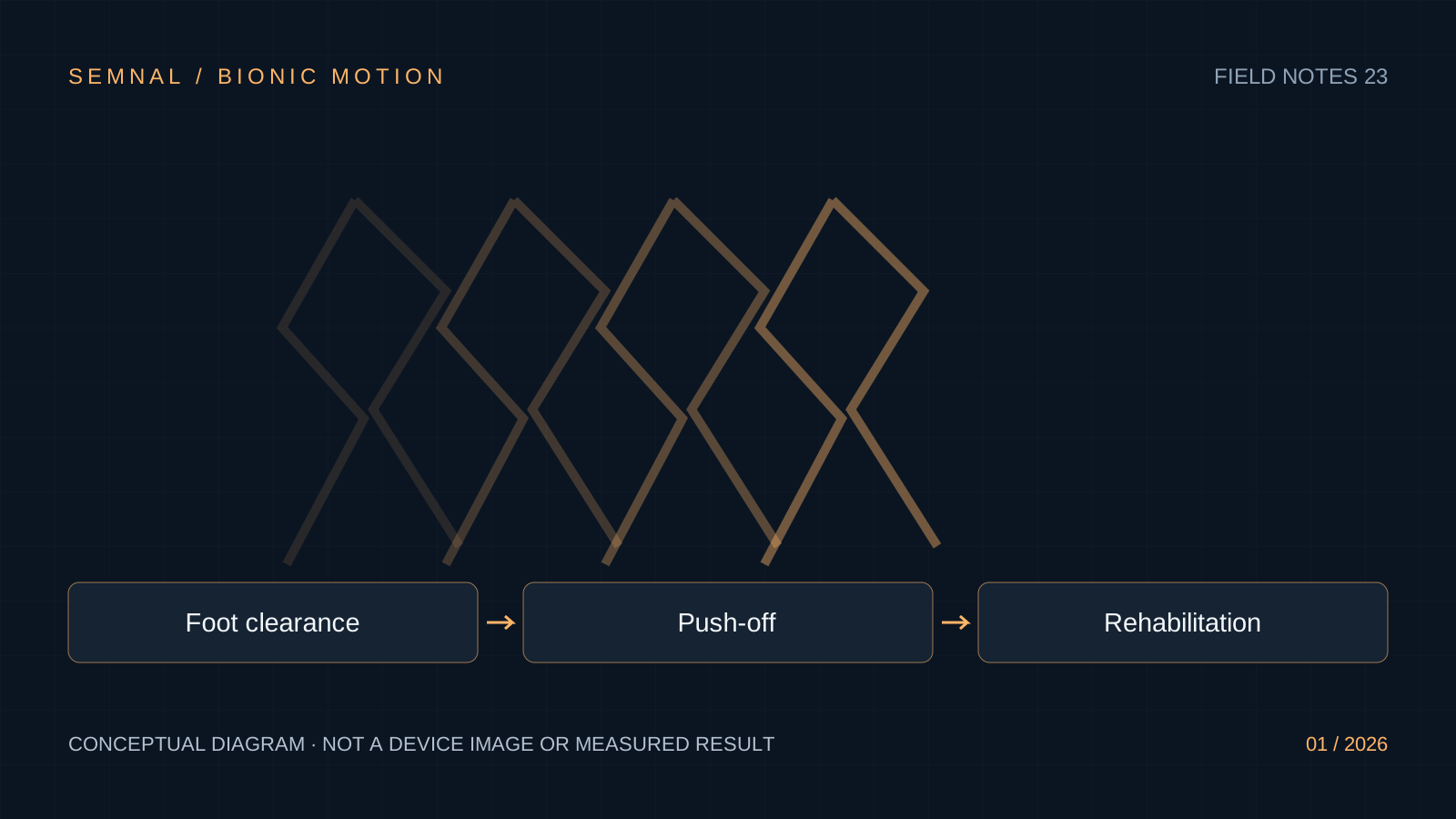
Walking assistance after stroke can target different moments of a step. Helping a foot clear the floor is not the same task as helping the body push forward. A soft ankle exosuit gives researchers a way to study both.
A rehabilitation feasibility study
A 2020 multi-site study of the ReStore soft robotic exosuit examined safety, reliability and feasibility during gait rehabilitation after stroke. It involved 44 participants. The study concerns supervised rehabilitation in a defined clinical population; it does not establish that a wearable prevents falls or improves mobility for otherwise healthy older adults. Study record
Keep the clinical setting attached
The distinction between a rehabilitation tool and an everyday mobility aid matters. A therapist can adjust a session and provide support that may not exist at home. Results obtained in that setting should keep the setting attached to them.
For a woman over 50 following stroke technology, the useful question is how the proposed assistance relates to her specific walking difficulty and rehabilitation goals. Semnal cannot determine that from a device description. What we can do is explain which part of movement the research addresses and which outcomes it actually measured.
Lasting benefit needs a different test
Lasting functional benefit requires controlled evidence; fitting and session demands determine how that evidence translates into rehabilitation. An ankle angle, walking speed and confidence outside the clinic each tell a different story. Strong reporting should show how these measures relate rather than treating any improvement as proof of overall recovery.
Why revisit a 2020 study?
This is background for understanding a technology pathway, not a new trial announcement. Feasibility work asks whether an intervention can be delivered and evaluated in its intended setting. That foundation matters, but later claims of recovery require their own evidence. The outcomes guide explains how to keep those questions separate.
Sources and editorial note
Source note · 29 June 2026. Research dates refer to the original work. Prepared with AI assistance from the linked sources; no hands-on testing or interviews. Methods, disclosures and corrections.