
Moving rehabilitation home changes more than the address. A system must work around setup, communication, motivation and the moments when something does not behave as expected. Soft robotics paired with remote support is one way researchers are investigating that transition.
Robotics plus remote rehabilitation
A 2024 paper in Wearable Technologies examines combining a soft robotic glove with telerehabilitation for motor function after stroke. The work brings a physical assistance device together with a remote rehabilitation approach. It is evidence about a particular research system, not proof that unsupervised robotic exercise is appropriate for every person recovering from stroke. Wearable Technologies
Home use still involves support
The home setting can be attractive because a task may fit more easily into ordinary life. But moving work out of a clinic can also move responsibilities onto the user or someone helping them. That work needs to be counted before describing home use as independent use.
For older women, evaluation should ask who puts the glove on, manages the connection and resolves a problem. These questions must be answered by participants’ experiences, not by stereotypes about who is comfortable with technology. The ability to obtain help is part of the design.
Count interruptions as well as sessions
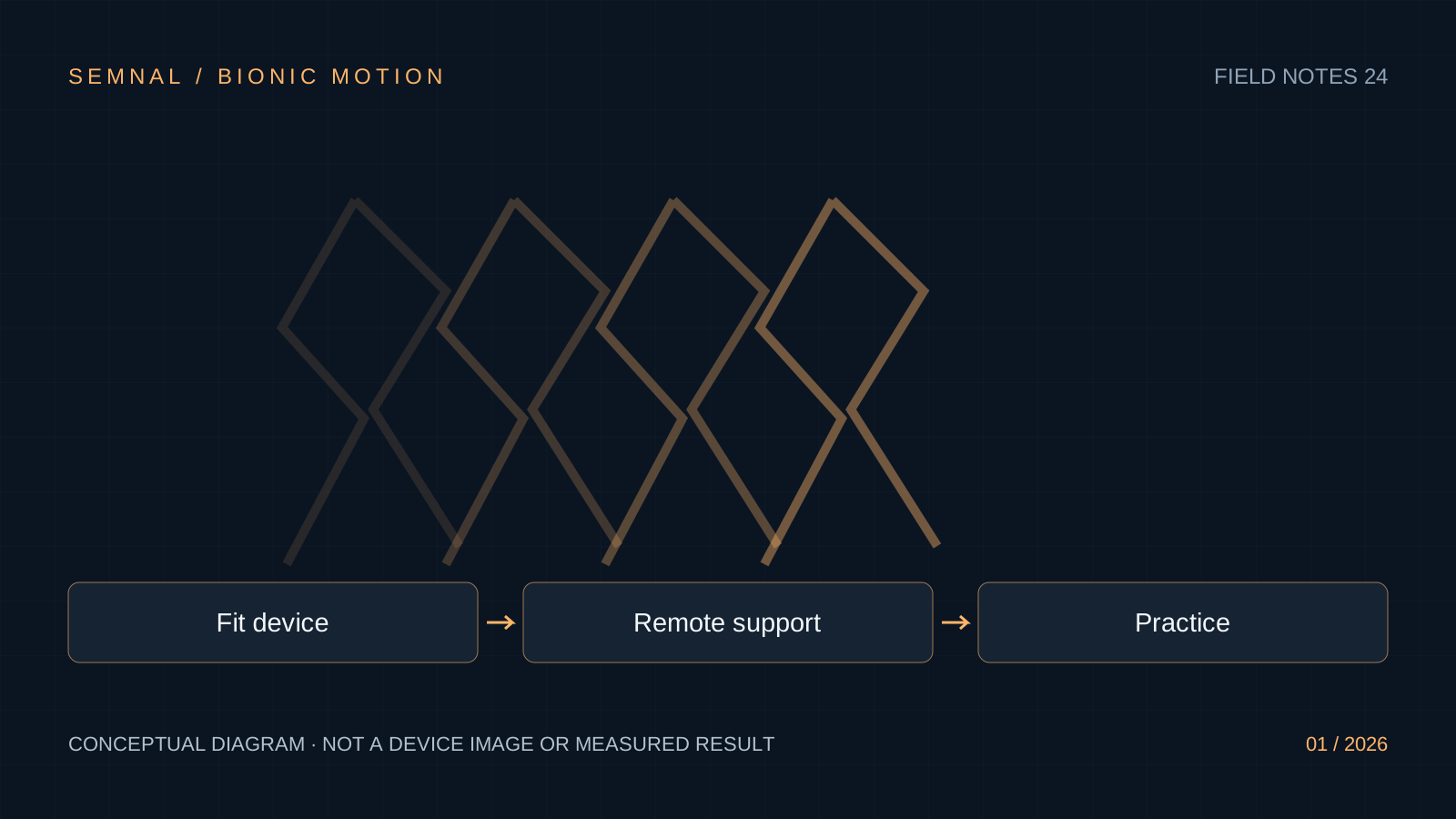
Useful follow-up would describe adherence, technical interruptions, support time and outcomes beyond the immediate session. The glove’s contribution needs to be distinguished from that of structured therapy. A connected device becomes meaningful when the whole rehabilitation arrangement works for the person.
Follow the support, not just the device
A useful future report would show a session from beginning to end: setup, exercise, feedback and what happens after an interruption. That would help distinguish a successful home arrangement from an attractive demonstration. The home speech-interface feature examines this same transition in a different technology, where continuing support also shapes independence.
Sources and editorial note
Source note · 9 April 2026. Research dates refer to the original work. Prepared with AI assistance from the linked sources; no hands-on testing or interviews. Methods, disclosures and corrections.