



A retinal-implant company has to deliver more than a tiny chip. Surgery, external equipment, training and continuing support all shape whether the technology can become useful. Science Corporation’s PRIMA programme is a case study in that larger translation challenge.
What the trial and company materials establish
Science’s PRIMA material describes a system combining an implant with external optical and processing components. The associated NEJM trial concerns geographic atrophy due to age-related macular degeneration. The company is a named funder of that research. A published study establishes evidence to examine; it does not by itself establish routine access in a reader’s country. Science, PubMed
A service has to exist around the chip
The companion trial analysis examines the clinical results. This profile follows the pathway around the implant: training, equipment support and access to a service that can deliver the procedure.
The relevant audience is defined by the condition and eligibility criteria, not simply by age. A company working on a later-life eye disease is of interest to women over 50, but it should not be presented as offering a general vision upgrade. The distinction preserves both relevance and accuracy.
A company milestone that changes the question
On 22 July 2026, Science announced European commercial launch of PRIMA after CE marking under the EU Medical Device Regulation. Its announcement described reimbursement applications and clinical-site activation as work underway, with a first commercial implant expected in Germany. That is a substantive change from the investigational language in the company’s older 2024 presentation. Dated launch announcement
The wording deserves care. A commercial launch establishes a company milestone; it does not establish that every eligible patient can already receive the procedure nearby or have it paid for. An expected first implant is also not the same as a confirmed completed procedure. Those distinctions are particularly useful for readers comparing headlines with a practical route to care.
What Science has to deliver around the implant
The company is developing a system, not simply a component. The implant, specialised glasses and image-processing arrangement have to work together, and a clinical service has to support their use. A tiny implant can therefore sit inside a substantial treatment pathway. The size of the hardware is not a measure of the commitment required from a patient.
A useful company assessment follows that whole pathway. How is eligibility established? Where are procedures offered? What training follows? Who supports the external equipment? Which parts of the cost are covered? This profile does not invent answers where the reviewed sources do not supply them. Instead, it identifies the operational work that turns a regulatory milestone into reliable access.
Evidence and commercial ambition need separate columns
The trial analysis examines the benefit and adverse-event results. The company profile has a different job: assessing whether the organisation is building the arrangements required to make those results useful beyond the research setting. A published trial and a service network are related achievements, but one does not automatically produce the other.
Science was a named funder of the trial. That fact should be visible without being treated as an automatic reason to dismiss the research. The appropriate response is to read the methods, outcomes and disclosures, then distinguish the paper’s findings from the company’s broader claims about the future.
The US and European stories are not interchangeable
The July announcement states that PRIMA was not commercially available outside the EU/EEA. It also mentions US Breakthrough Device and Humanitarian Use Device designations. Those designations should not be rewritten as US marketing approval. A reader in Europe and a reader in the United States may therefore face different access questions while reading about the same underlying technology.
For Semnal, the company is worth following because it is moving from an impressive implant study towards a delivery problem: making a specialised vision intervention usable and supportable. The next meaningful milestones are dated evidence of clinical delivery, support and payment arrangements, alongside sustained outcomes. A launch headline is a beginning of that story, not its completion.
The milestones after publication
Dated regulatory decisions, service locations and evidence about continued use are the milestones to track. Dates and jurisdictions should accompany availability claims. This is an independent reading of public materials, not an interview, endorsement or hands-on review, and we have not established an individual treatment pathway for readers.
The idea in view
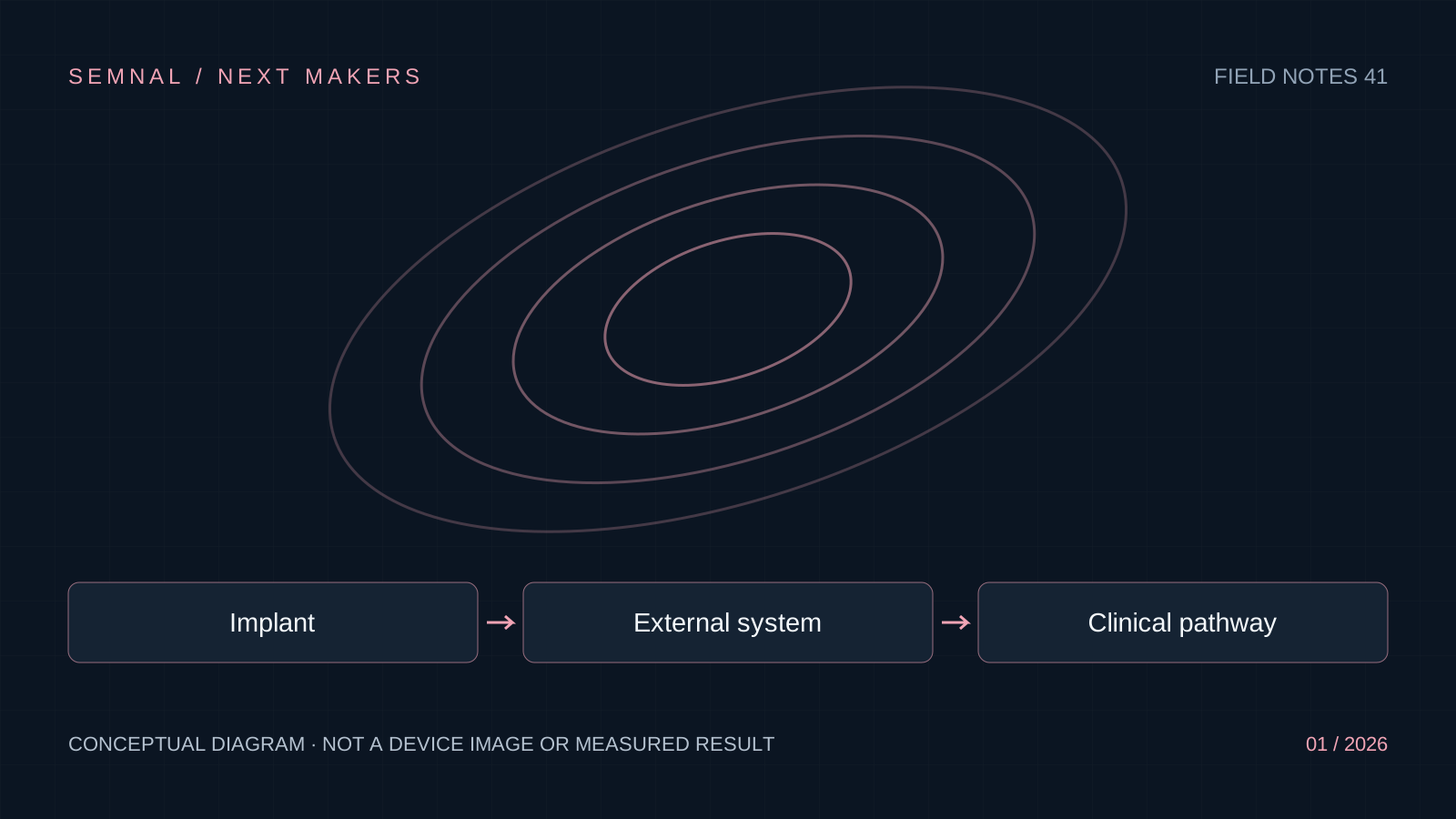
Original Semnal diagram. A simplified explanation, not a photograph of the device or a clinical result.
Sources and editorial note
Source note · 27 July 2026. Research dates refer to the original work. Prepared with AI assistance from the linked sources; no hands-on testing or interviews. Methods, disclosures and corrections.