


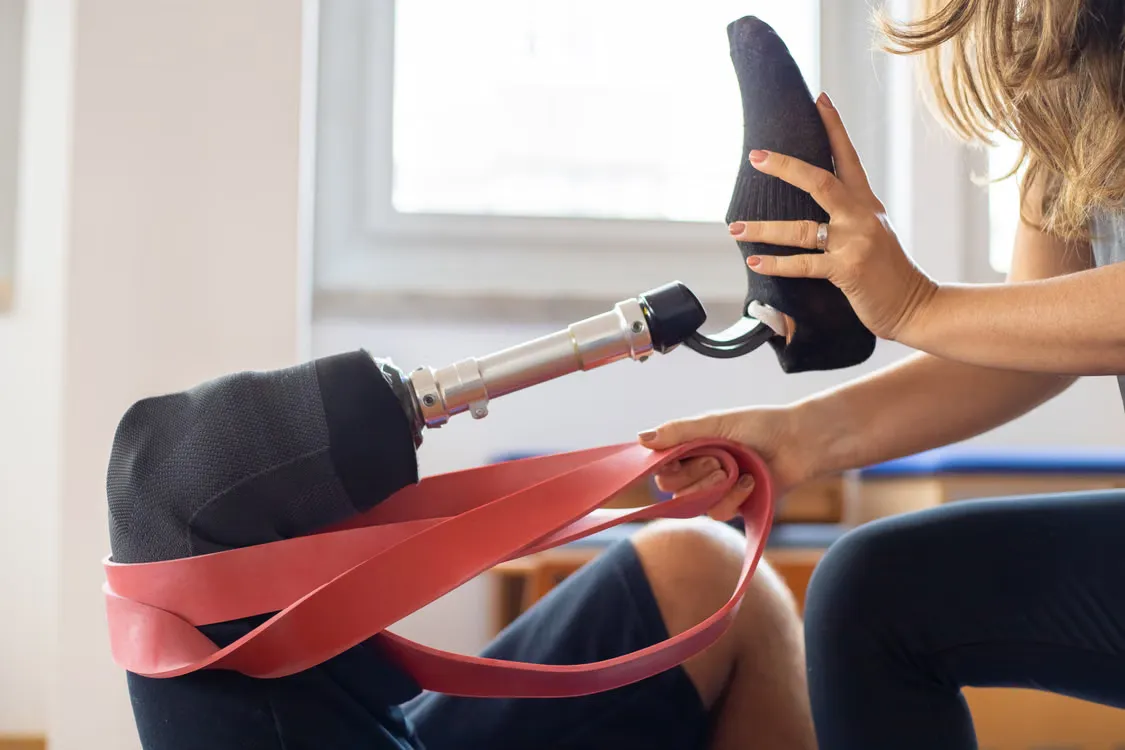
A powered knee can supply movement, but the source of its instructions matters. One research direction uses signals from surgically reconstructed muscle pairs to let a person directly influence the prosthesis.
One participant and a research knee
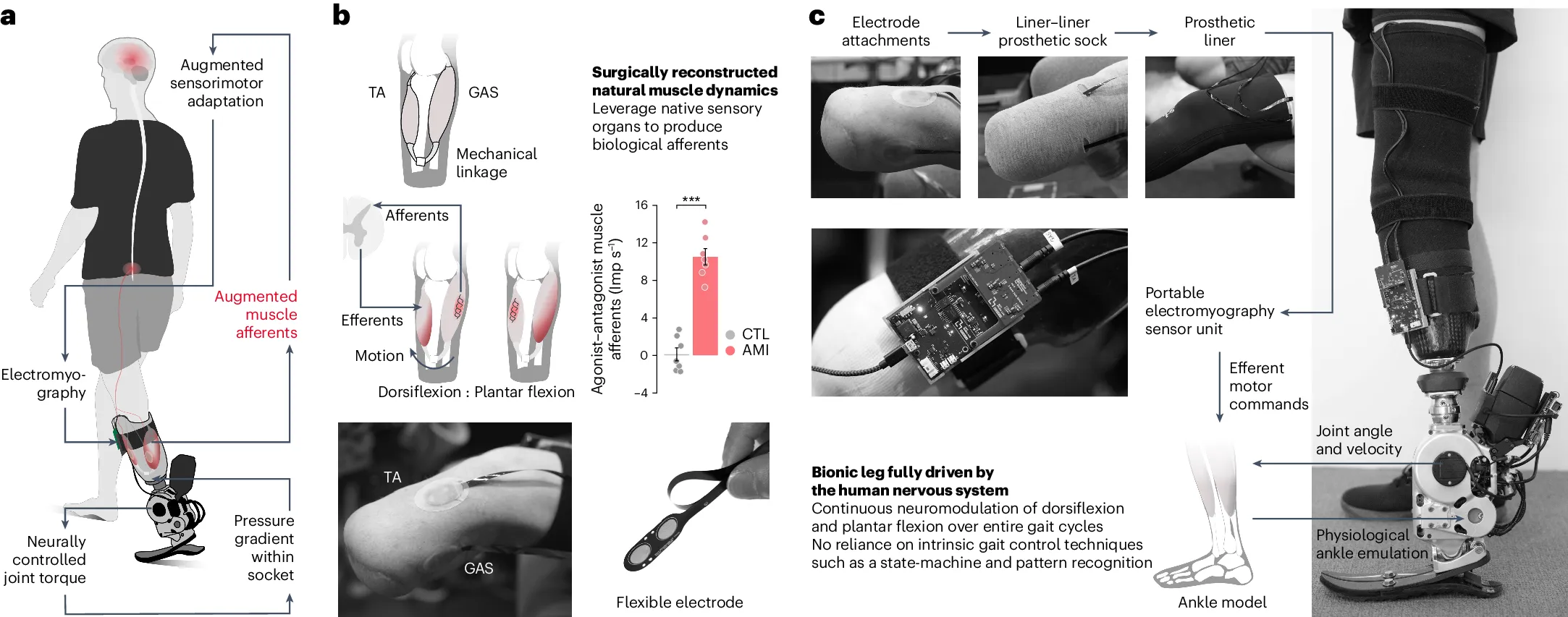
A September 2025 MIT thesis by John A. McCullough describes a research knee platform controlled through electromyographic signals from an agonist–antagonist muscle interface. One participant with an above-knee amputation completed tasks including standing, walking and stair ascent. The source is a thesis and a single-participant evaluation. It should not be described as a large clinical trial or a general assessment of commercial powered knees. MIT thesis
The connection from muscle to movement
A thesis can be a useful window into engineering detail that disappears from a short headline. Here, the significant connection is between the reconstructed muscle system, the recorded signal and the powered joint. None of those elements alone explains the complete experience.
For Semnal, this is an early technical story about agency. The wearer should be able to initiate an action and understand the system’s response. Future studies need to examine confidence, effort and practical operation alongside task completion, with participants who reflect the intended users.
What would make the result transferable?
The next step is not to extrapolate one person’s results to all amputees. It is to establish reproducibility, safety and sustained usefulness across more people and circumstances. Reports should identify which findings depend on the surgical interface and which might transfer to other designs.
Read it alongside the ankle research
The neural prosthetic-leg study also concerns a muscle interface, but its participants and prosthetic system are different. These stories illuminate a shared design question: how much control comes from the person’s own signals? They should not be combined into a single evidence base for every amputation level or powered joint.
Sources and editorial note
Source note · 20 March 2026. Research dates refer to the original work. Prepared with AI assistance from the linked sources; no hands-on testing or interviews. Methods, disclosures and corrections.