



Making a voice louder and making it easier to understand are different goals. That distinction explains why new listening technologies focus on separating signals, recognising context and controlling what reaches the listener.
What amplification can—and cannot—do
The US National Institute on Deafness and Other Communication Disorders explains that hearing aids amplify sound and that different designs and features address different needs. Its guidance also makes clear that a hearing aid does not restore normal hearing. This background is useful for understanding new AI audio claims, but it is not an evaluation of any particular experimental listening system. NIDCD
Selecting a voice is another problem
Imagine two competing voices being made louder together. The change in volume does not itself tell the listener which voice matters. An intelligent audio system is therefore solving a selection problem as well as an amplification problem. Semnal treats that distinction as the foundation of this section.
For women over 50, the editorial test is participation: can someone follow the exchange they want without excessive effort? That question should be investigated with users, including people whose hearing needs differ, rather than answered by an attractive waveform or a single laboratory metric.
Three outcomes to keep separate
When reading a claim, separate sound quality, speech understanding and listening effort. Ask what the comparison was and which conditions were tested. A quieter recording can be impressive while still leaving unanswered whether the wearer understands more of a conversation. Those unanswered questions are where the next useful research should begin.
A small vocabulary for a crowded room
Sound quality describes the experience of the signal. Speech understanding concerns what the listener comprehends. Listening effort concerns the work required. They can point in different directions, so reporting only one can hide a trade-off. The conversation-aware audio project explores selection; it does not settle all three outcomes for older listeners.
Research image and context
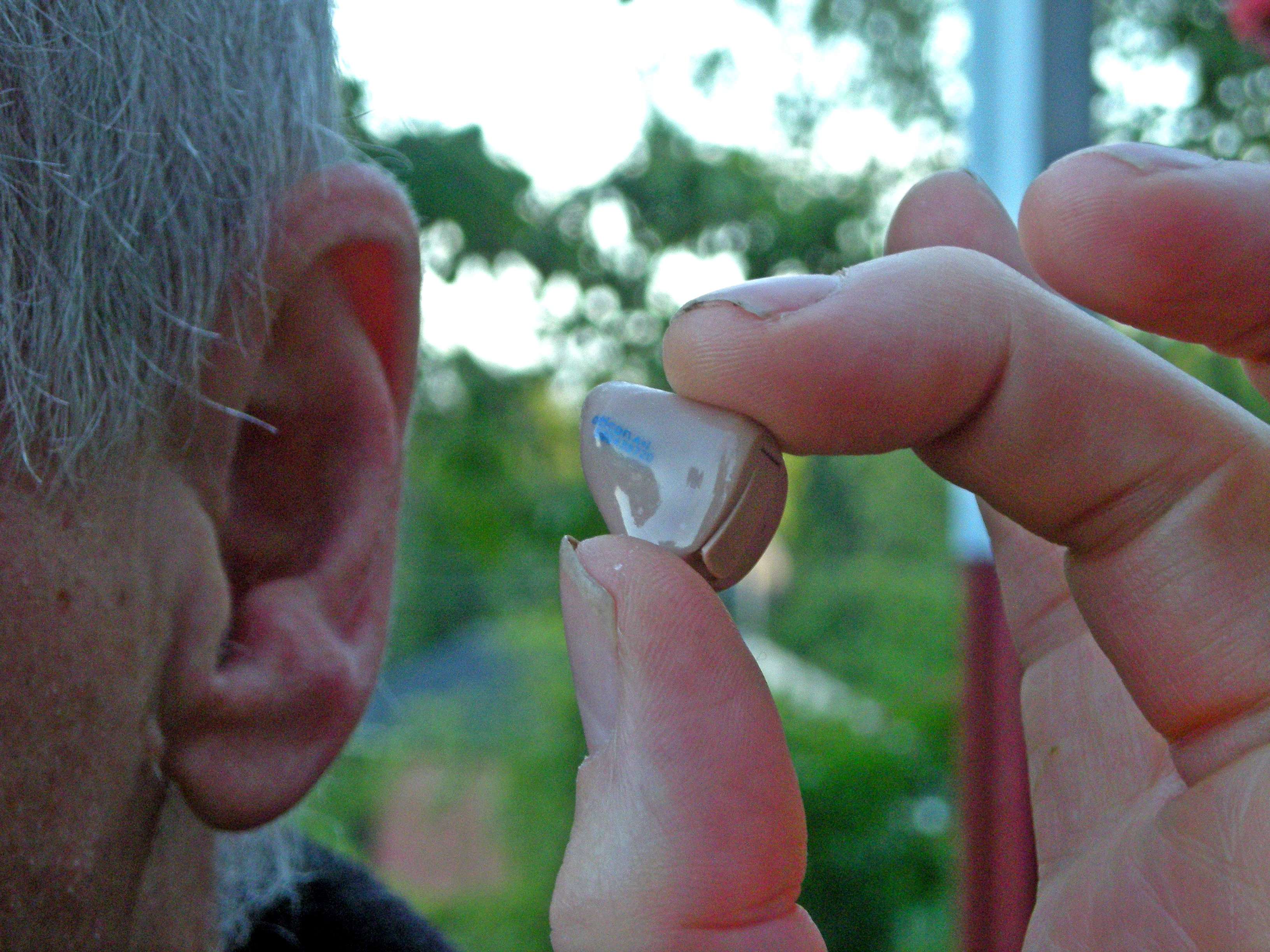 View original image · Full resolution (8.5 MB)
Hearing aid, photo taken in Sweden Context photograph; not the featured study or product unless explicitly identified. Credit: Jonas Bergsten. Public domain.
The idea in view
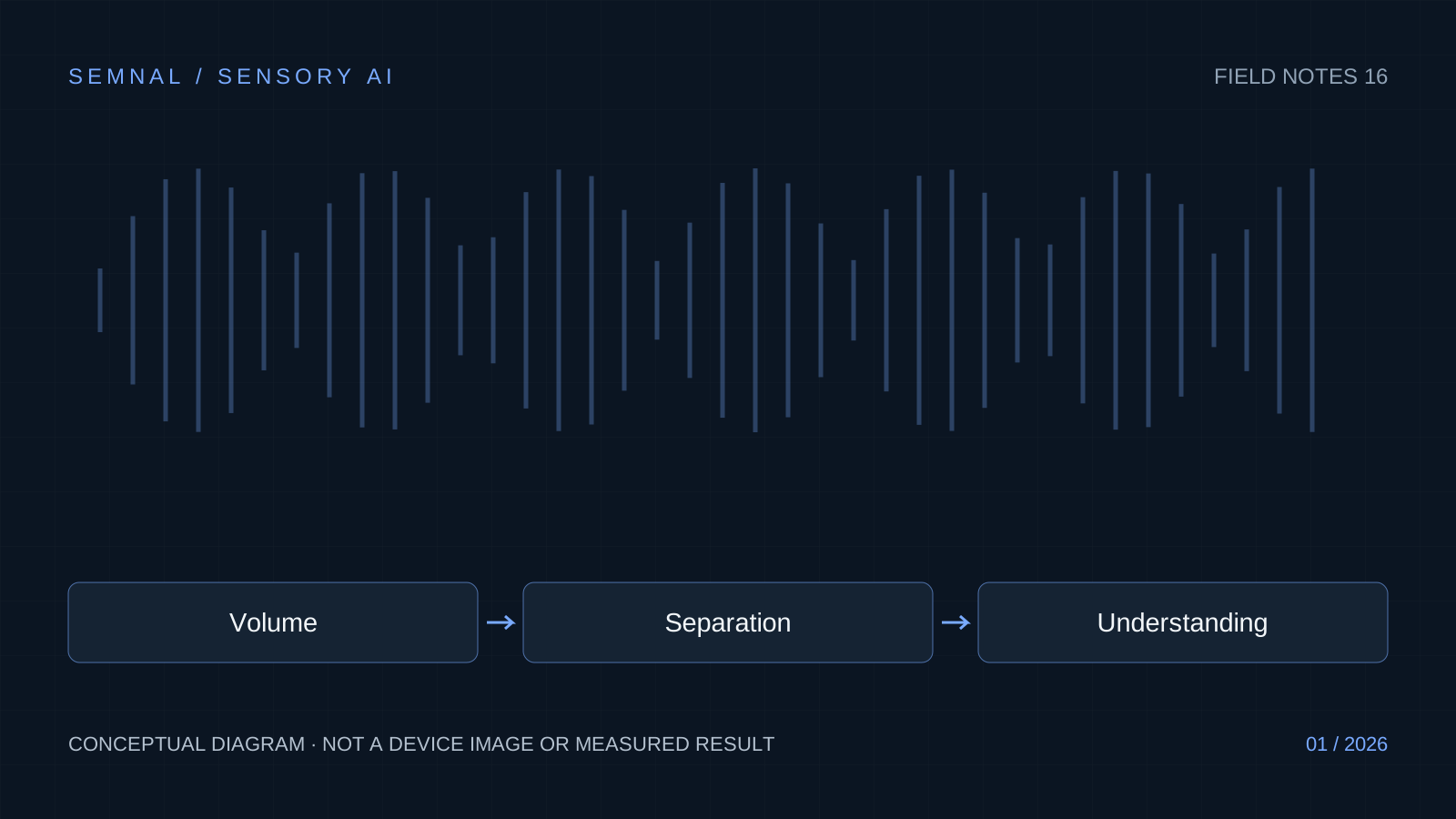
Original Semnal diagram. A simplified explanation, not a photograph of the device or a clinical result.
Sources and editorial note
Source note · 4 May 2026. Research dates refer to the original work. Prepared with AI assistance from the linked sources; no hands-on testing or interviews. Methods, disclosures and corrections.