


A glove can become a communication surface: sensing where contact occurs and delivering a patterned vibration back to the hand. Embroidery offers a route to putting both functions into a flexible textile.
What ten younger adults tested
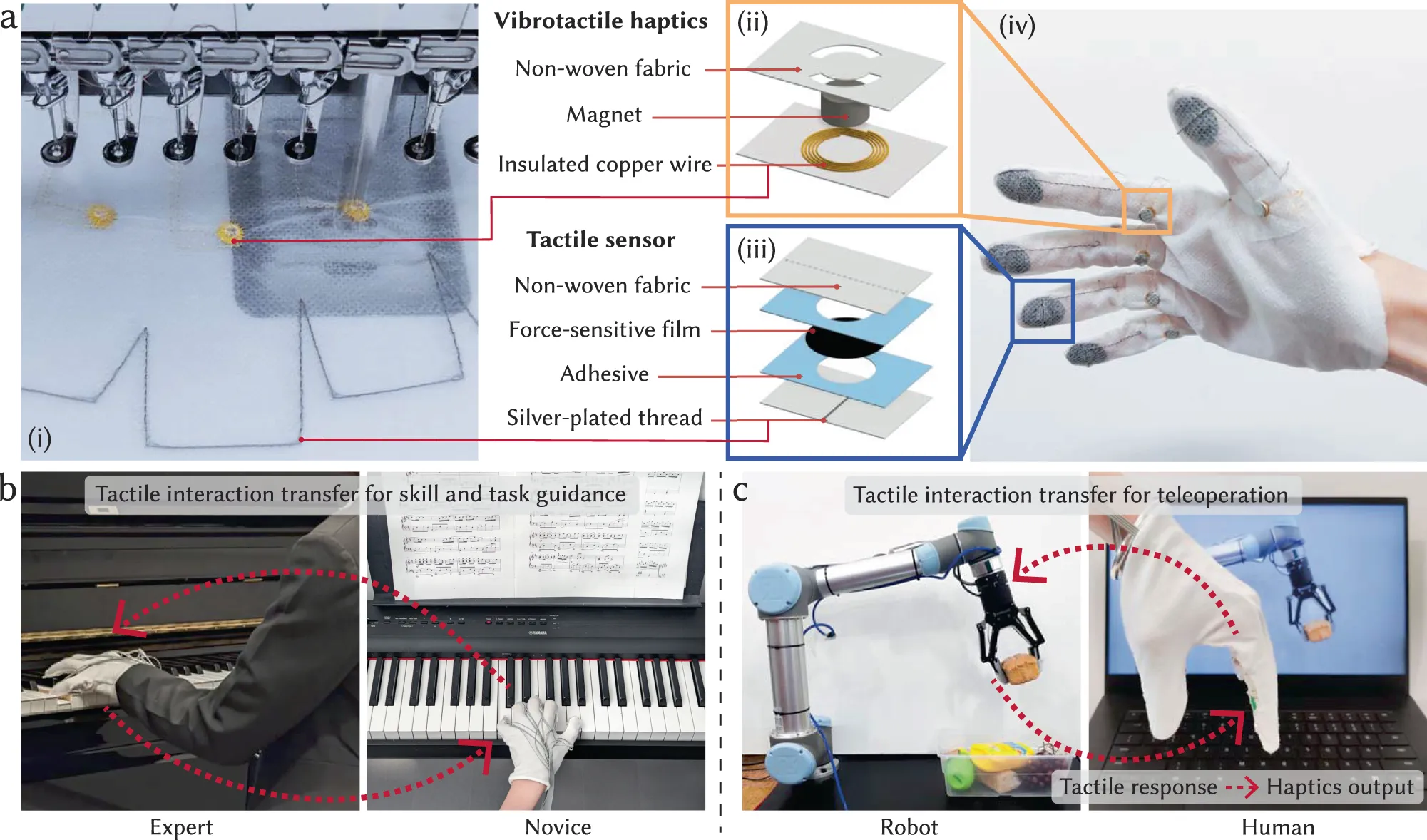
A 2024 Nature Communications paper describes embroidered tactile sensors and vibrotactile actuators integrated into gloves. Its haptic-perception study involved ten people aged 26–32, including four women. The work demonstrates an interface and fabrication approach. It does not establish restoration of lost sensation or performance in women over 50. Nature Communications
An interface needs a readable language
The age range is not a footnote for this publication. It tells us that the next question is whether the interface can be perceived and used by the people we aim to serve. A promising young-adult result should motivate relevant testing, not silently stand in for it.
Semnal’s interest is in the language of touch. A useful pattern needs to be distinguishable, learnable and appropriate to the task. More vibration points do not automatically mean more useful information. The person must understand what the pattern is asking them to notice or do.
A textile can send a message as well as sense contact
The glove research combines two functions. Tactile sensors register contact, while vibrotactile actuators deliver small vibrations that the wearer can perceive. The distinction is similar to the difference between receiving information and displaying it. Putting both into fabric creates an interface, not simply a new pressure sensor.
The paper describes a glove with 23 vibration units. Participants identified the activated location with an average accuracy of 94% in the reported task. That figure concerns a particular perception test in a small group of younger adults. It does not mean the glove restores 94% of touch, or that an older wearer will recognise every signal during a daily activity. Original study
More signals do not necessarily mean clearer communication
A useful tactile message needs a purpose. A vibration could indicate contact, direction or a prompt to adjust a grip, but the wearer has to learn what it means. Adding more locations or patterns increases the possibilities; it can also increase the amount of interpretation required. The design challenge is to make the message understandable in the task, not merely distinguishable in an experiment.
Consider a hypothetical interface that signals when an object is held securely. Its value would depend on whether the signal arrives at the right time and whether the user can act on it without watching another display. A correct laboratory identification is part of that case, but the complete interaction needs testing separately.
The missing age range is an opportunity for better research
The study’s participants were 26–32 years old, including four women. Reporting that clearly is more useful than either dismissing the study or presenting it as evidence for all ages. It tells us where a later evaluation could add information: different sensory abilities, hand sizes, preferences and tasks.
For women over 50, the interest extends beyond assistance for impairment. Tactile interfaces could also change how people interact with tools, remote systems or digital information. Those applications remain possibilities here, not demonstrated benefits. The article can explore them while keeping the experiment’s actual scope intact.
The underlying idea is worth following because it treats fabric as a two-way communication surface. Its success will depend on whether that surface conveys useful meaning without adding excessive effort. The future milestone is not simply a denser glove; it is a clearer conversation between a device and the person wearing it.
Testing the people and tasks still missing
Testing across hand sizes, sensory abilities and daily tasks would bring the work closer to use; washing and wear also matter. There is an important difference between a glove that can produce a signal and one that reliably communicates something meaningful. The research establishes a platform on which that question can be explored.
The idea in view
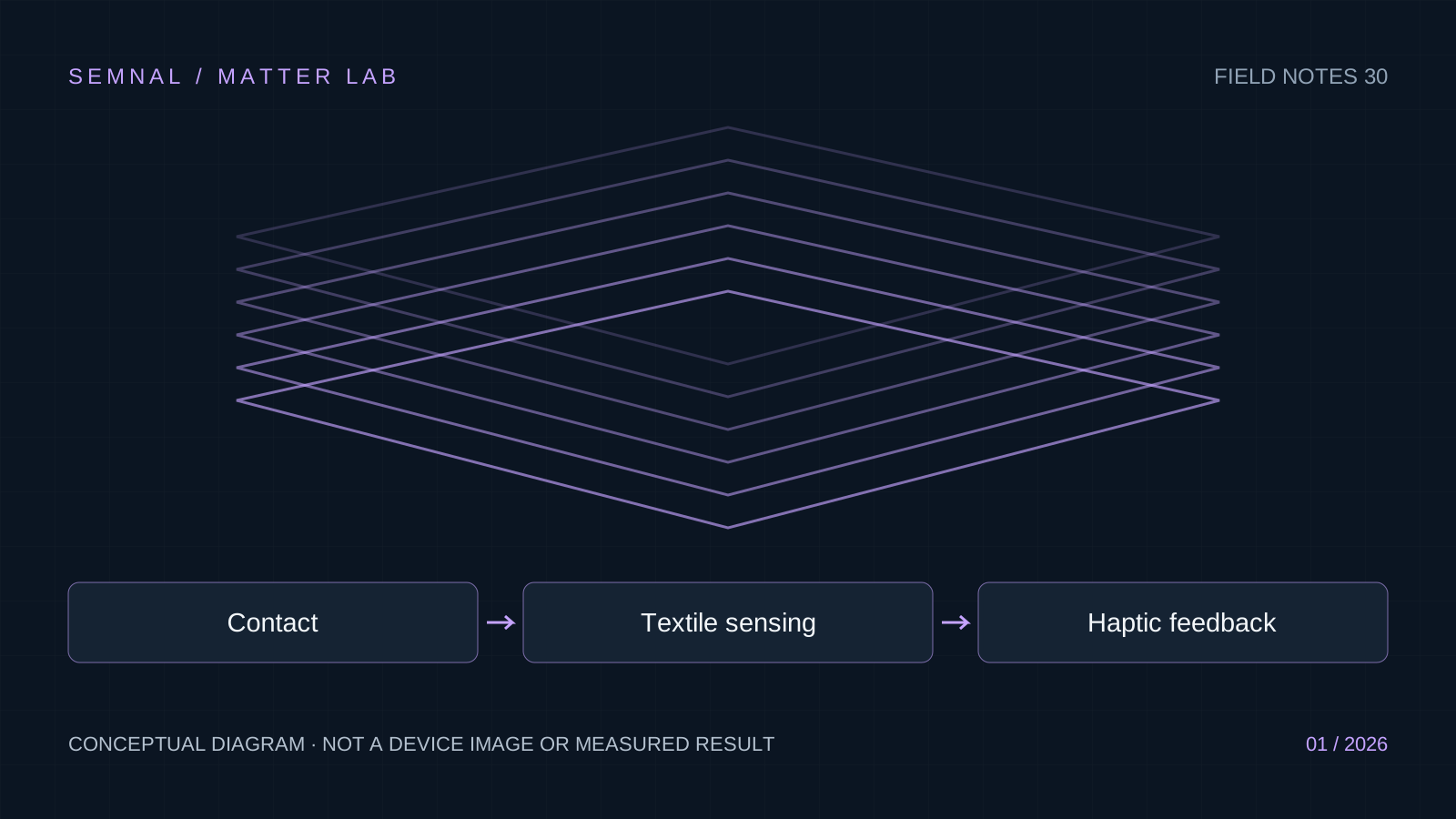
Original Semnal diagram. A simplified explanation, not a photograph of the device or a clinical result.
 View original image · Full resolution (0.9 MB)
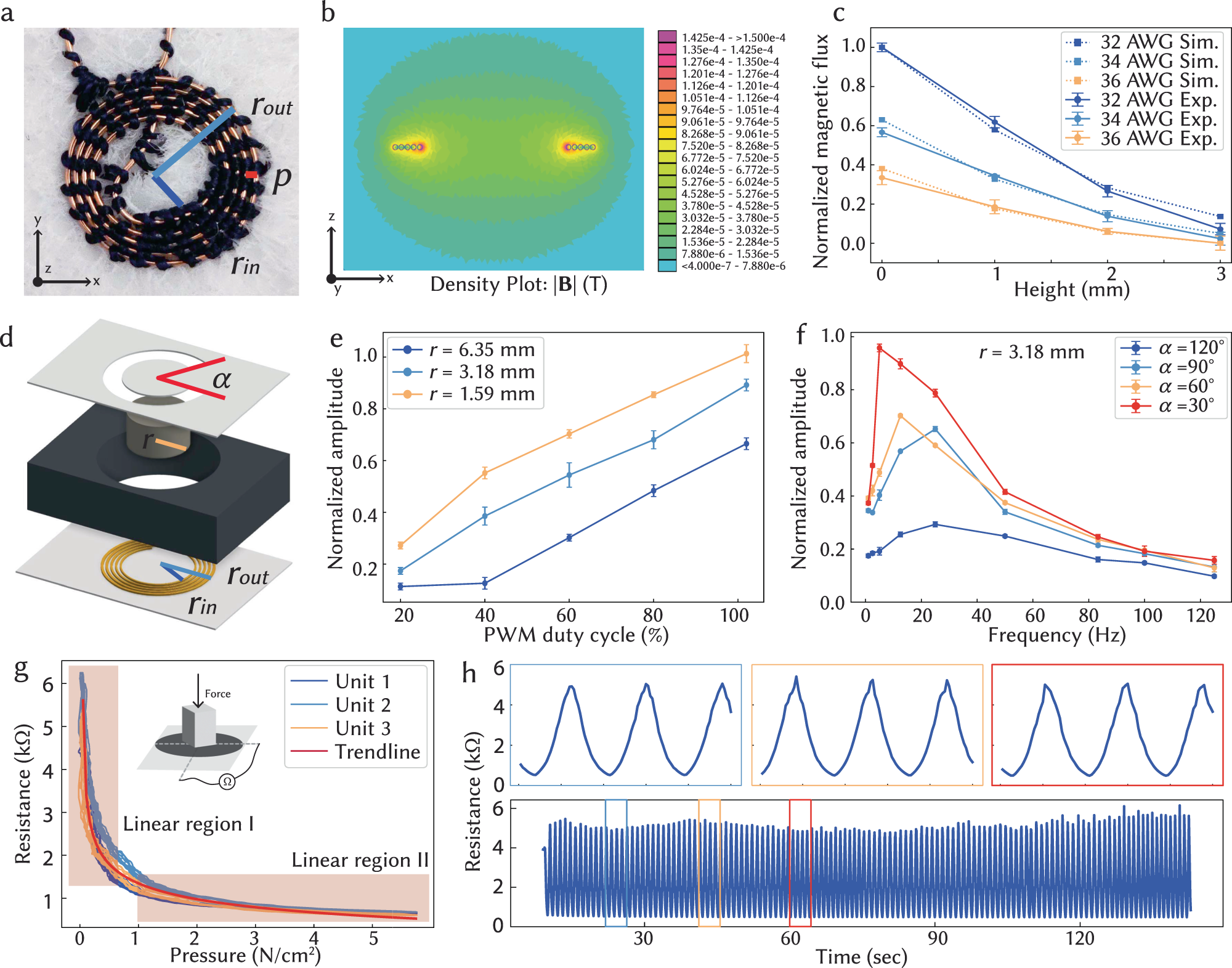
Luo et al., original research figure, CC BY 4.0. Reproduced without content changes. See the linked paper for the complete caption and methods.
Sources and editorial note
Source note · 8 July 2026. Research dates refer to the original work. Prepared with AI assistance from the linked sources; no hands-on testing or interviews. Methods, disclosures and corrections.