




The phrase ‘older adults’ can hide a wide range of circumstances. Age matters to research interpretation, but it cannot stand in for health status, functional ability, support needs or the task a person hopes to perform.
What the NIH background explains
NIH’s clinical-trial information explains that age does not automatically prevent participation, although individual studies may set age criteria. It also notes the importance of including different age groups because responses can vary. The page discusses cancer trials; we use it for that general research principle, not as device-specific guidance. NIH Clinical Center
Age, function and setting belong together
In a mobility study, the age range and eligibility criteria are more informative than the average age alone. Did participants walk independently? Was the task supervised? Was assistance available? Those details help explain what the result can and cannot tell a reader.
For women over 50, there is no single representative body or lifestyle. A reader may be interested as a researcher, a family member, a potential user or simply someone following science. Coverage should make the evidence legible without assuming frailty or treating age as a diagnosis.
Exclusions shape the meaning of a result
Future reports should make exclusions and support arrangements clear. A technology tested with fit older volunteers may still be valuable, but the article should not quietly extend its conclusions to people with very different needs. Better reporting lets readers identify the distance between the study and their own circumstances.
The average age is only a first clue
Two participant groups can have the same average age while differing in ways that matter to the result. One may include a narrow band of ages; another may span several decades. One may involve people who walk independently; another may involve people who need assistance. The average alone cannot describe those differences.
When reading a study, look for the range and the eligibility criteria alongside the average. Then ask what participants were able to do at the start. This helps explain the result without treating age as a complete description of health, capability or lifestyle. It is particularly useful for a publication whose readers include people in their fifties as well as much older adults.
The task and the support arrangement belong to the evidence
A supervised test gives researchers a defined setting. It may include practice, encouragement, equipment adjustment and help that would not be available in the same form at home. Those conditions do not invalidate the experiment. They tell us what was tested and what a later real-world evaluation would need to add.
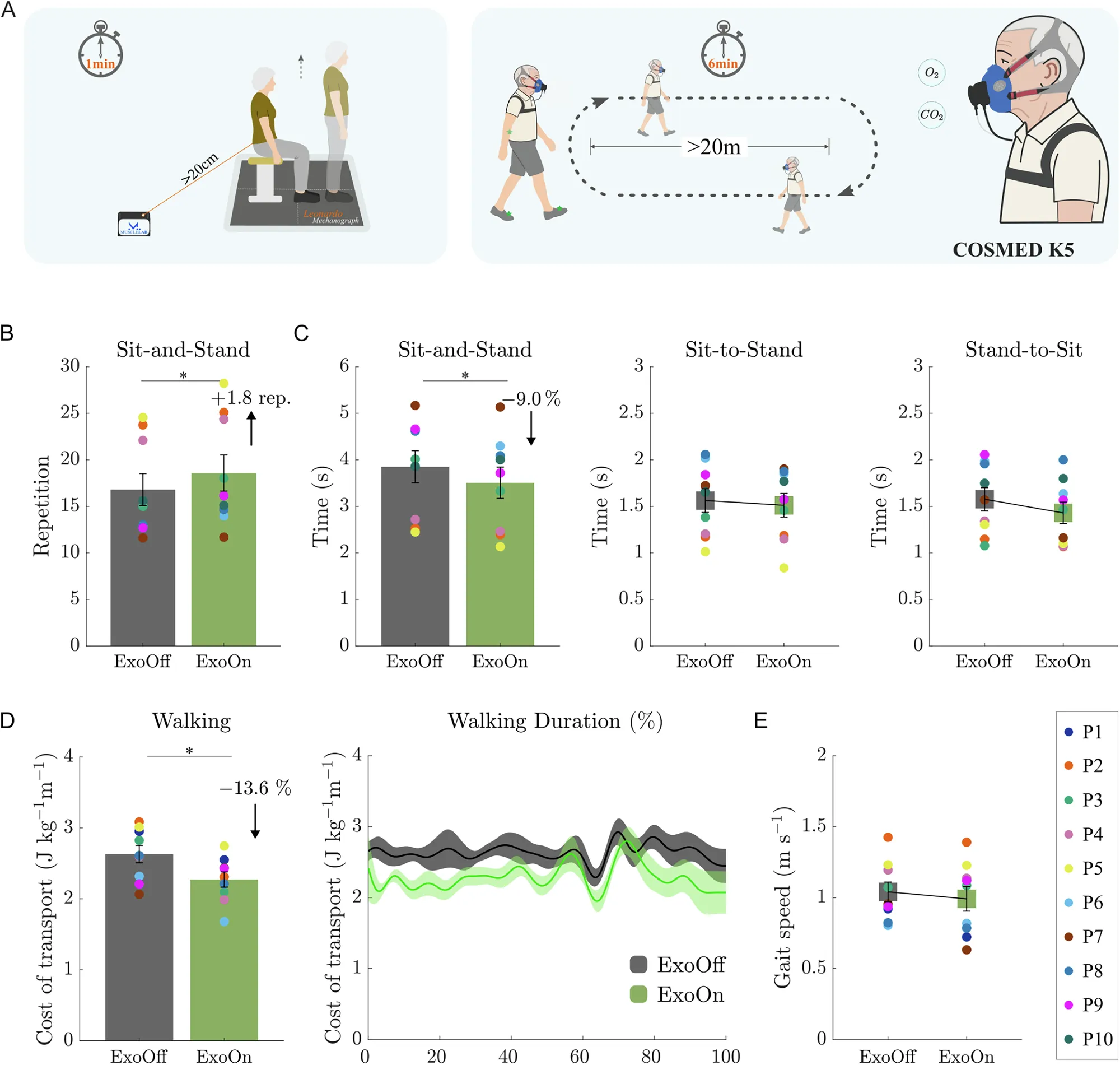
The soft-suit feature illustrates this point. Older adults were included, but the study still involved a small, supported evaluation. Age relevance does not automatically make the setting representative of a reader’s daily life. Both the people and the circumstances need to be considered.
A useful mismatch is not a reason to discard a study
Suppose a technology was tested in younger adults. It may still establish a useful engineering principle. The next question is whether the principle transfers to the intended population and task. A clear article can explain the mechanism while being explicit about that gap, rather than either overstating the relevance or dismissing the work entirely.
The same applies when a study includes older people with a particular diagnosis. Their result should not be generalised to every older reader. A disease-specific intervention can be important science without becoming a universal tool for ageing well. The intended condition helps define what the technology is trying to change.
Ask what participation required
Eligibility criteria can also reveal practical demands. Did the person need to complete a particular movement, understand a training procedure or attend repeated visits? These questions help explain who the evidence represents. They should be answered from the study, not from assumptions about what older people can or cannot do.
A future study that broadens participation may add information even if it does not produce a larger headline effect. Testing more varied circumstances can reveal where a technology is useful, where support is needed and where another approach may fit better. That is progress in understanding, not necessarily a disappointing result.
A better way to write about later life
For Semnal, later life is not a synonym for frailty. Readers may be working, travelling, caring for others, conducting research or exploring technologies for their own use. The article should connect evidence to a relevant activity without assigning a health problem to everyone in the audience.
A practical reading note can be short: participant ages, relevant condition, starting ability, support during testing and follow-up. With those five items, a reader can see the distance between the study and her own question more clearly. That does not determine personal suitability, but it makes the conversation about suitability more informed.
The purpose of age-aware reporting is therefore precision. It replaces a broad label with a description of real participants and real conditions. That gives older readers more agency in interpreting the science, rather than asking them to accept a generic promise made on their behalf.
The idea in view
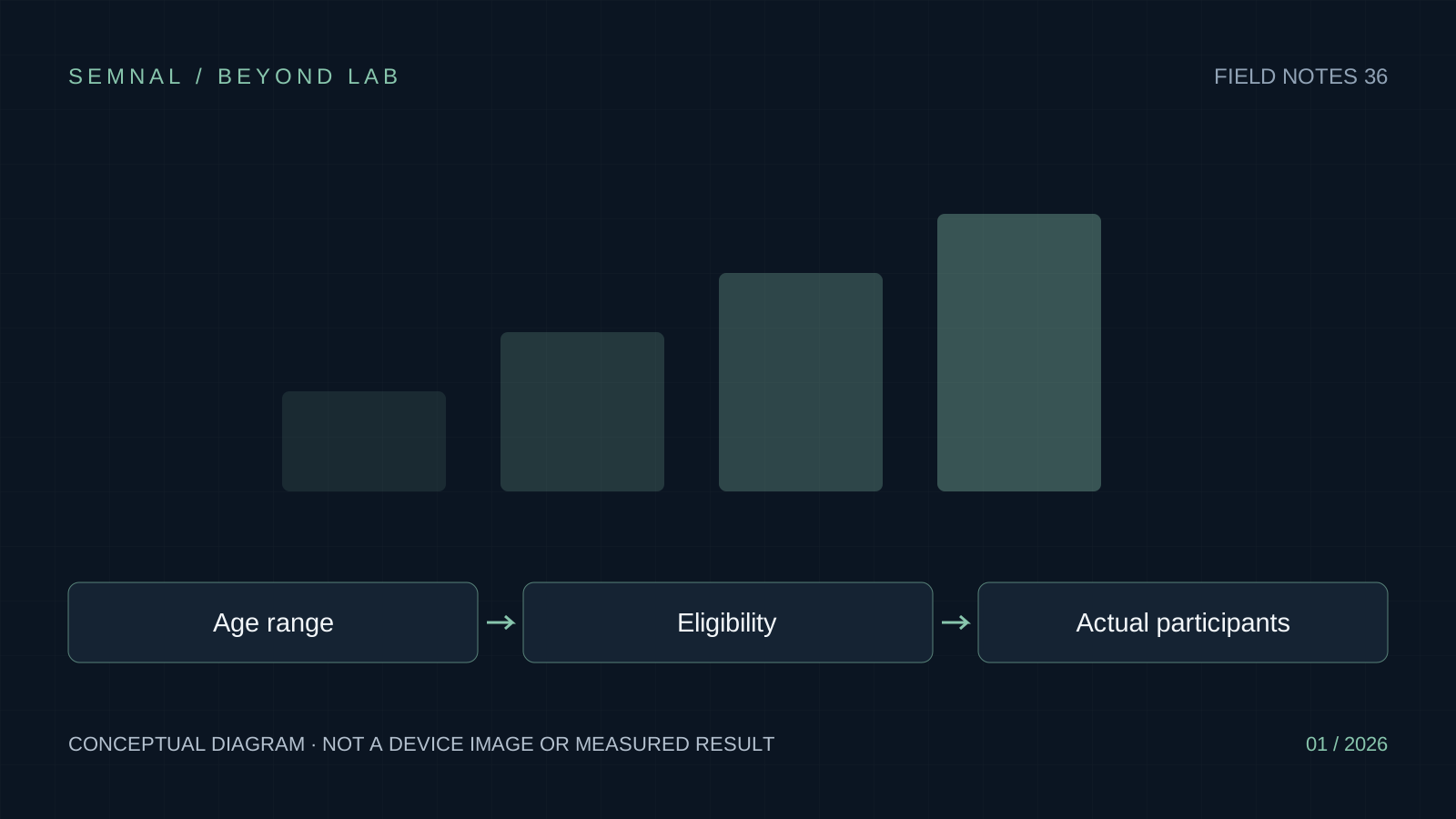
Original Semnal diagram. A simplified explanation, not a photograph of the device or a clinical result.
Sources and editorial note
Source note · 8 August 2026. Research dates refer to the original work. Prepared with AI assistance from the linked sources; no hands-on testing or interviews. Methods, disclosures and corrections.