



Touch is more than a pressure reading. Direction and the character of contact can matter to a robot trying to handle an object. Electronic-skin research explores how a flexible surface can infer a richer description from its measurements.
A surface that measures contact
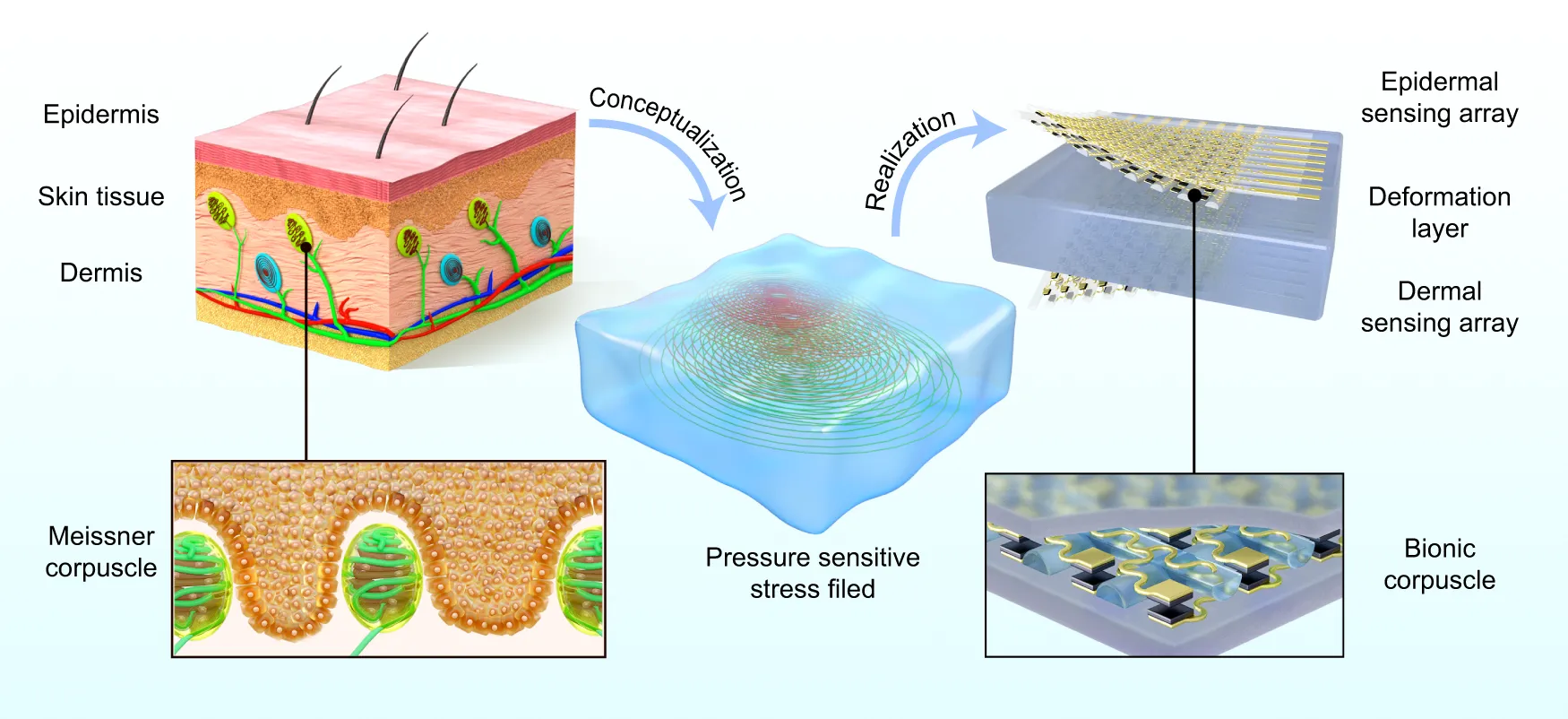
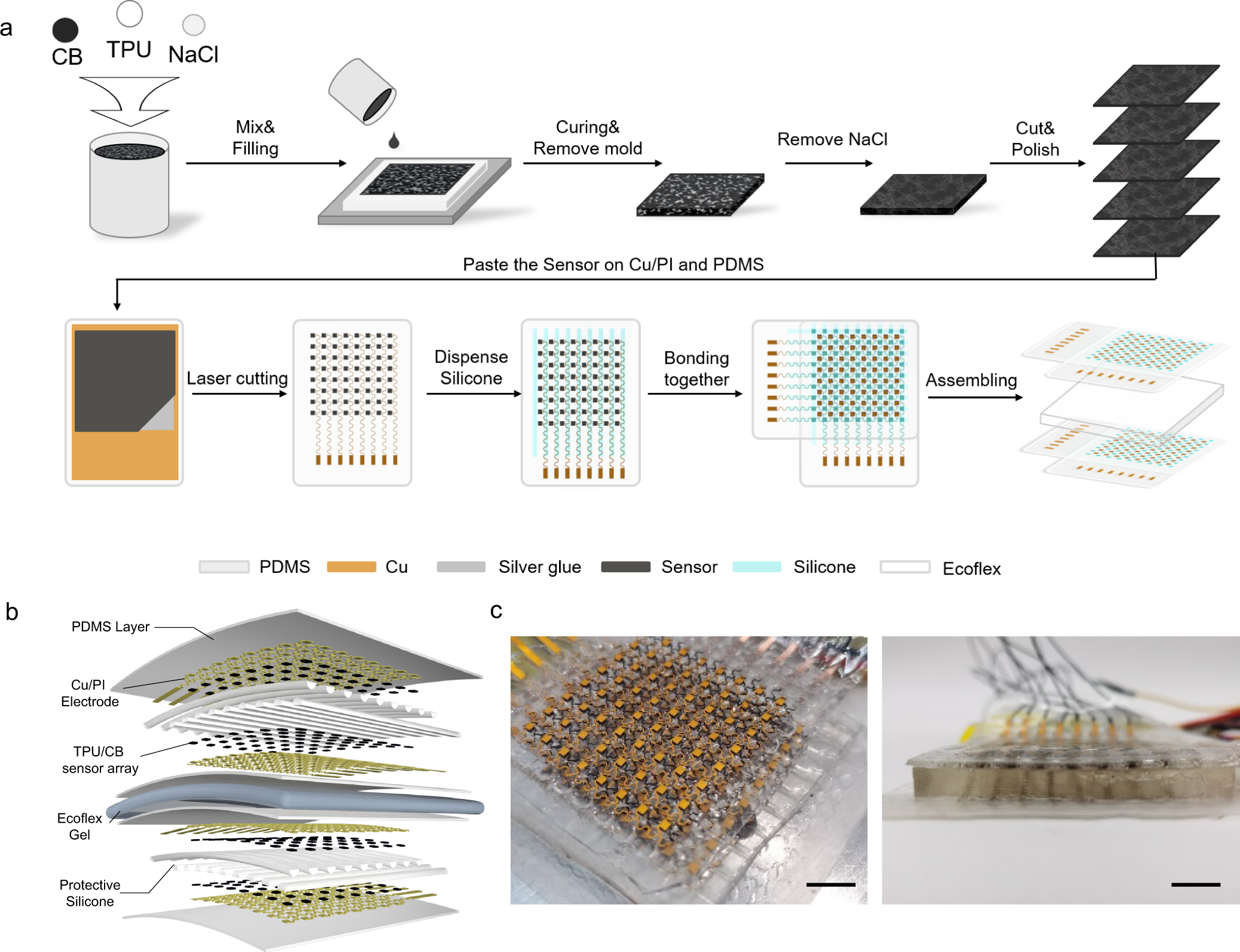
A 2023 paper in npj Flexible Electronics describes modular electronic skin using stress-field information to resolve three-dimensional force and assess the hardness of a contacted object. The authors also examine integration on differently curved surfaces. This is a sensing-system demonstration, not evidence that a person can regain natural skin sensation. npj Flexible Electronics
The word skin needs a boundary
The term ‘skin’ can invite an overly human interpretation. Here, it refers to a technical surface and its measurements. Connecting that information to a prosthetic user, an assistive robot or a clinical decision would require additional systems and evidence.
For Semnal readers, the relevance is in the potential quality of interaction: how a future device recognises contact rather than merely producing motion. Two practical questions remain: does the signal stay interpretable as the surface changes, and does the complete system respond appropriately? Those are proposed evaluation questions, not demonstrated clinical benefits.
A measurement must lead to a useful response
The next useful results would connect sensing accuracy to a task where mistakes matter, while accounting for durability and calibration. Modularity is valuable if it makes a system maintainable, but the user should not have to become a sensor engineer. A promising artificial surface is one component of a much larger interaction.
Where sensation enters the story
A robot can use force information without a person feeling anything. Returning touch to a person adds another interface, illustrated by the artificial-touch study. This distinction keeps a sensor result in perspective: measuring a richer contact signal is an important engineering step, but it is not itself the restoration of human sensation.
The idea in view
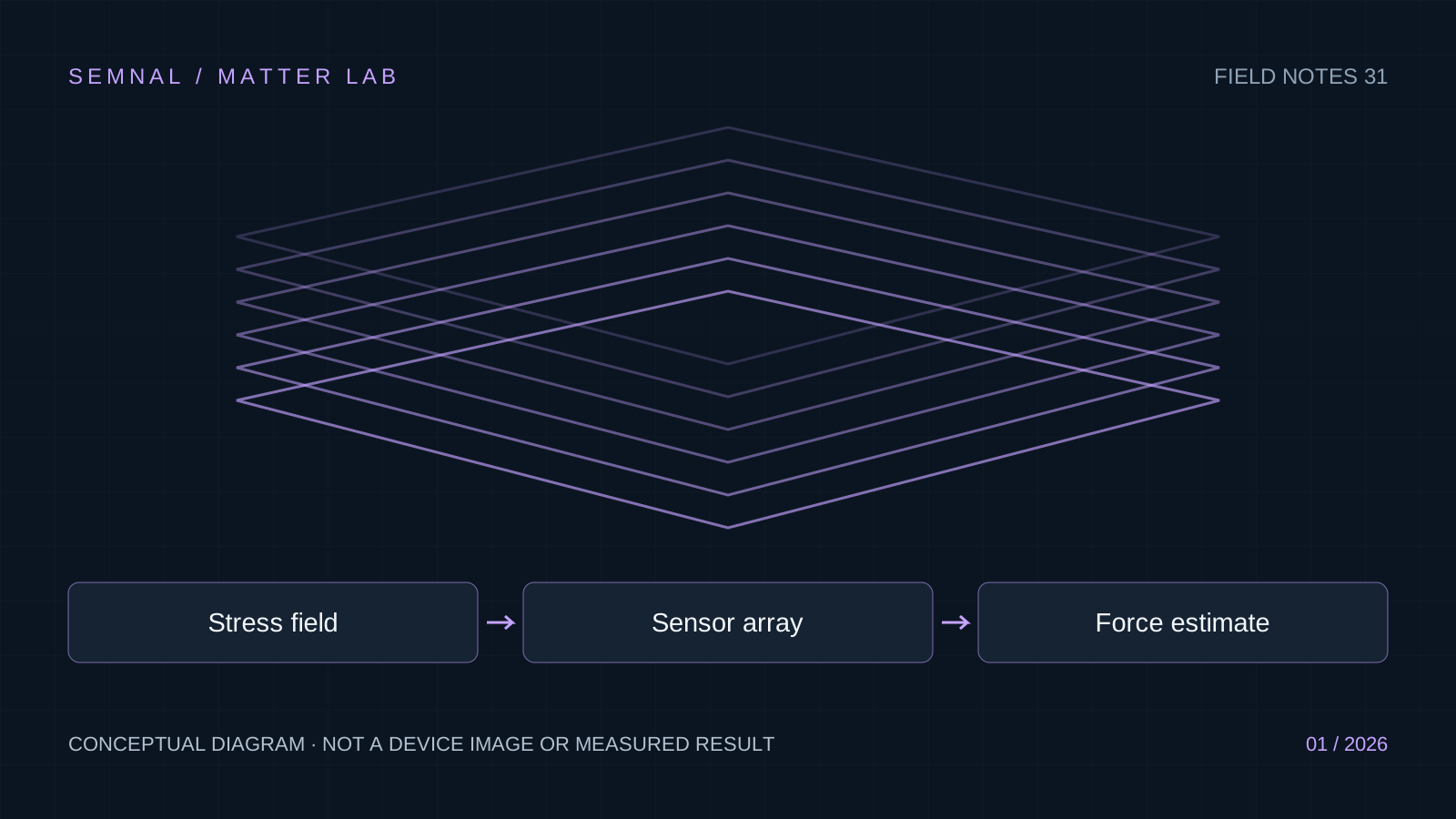
Original Semnal diagram. A simplified explanation, not a photograph of the device or a clinical result.
 View original image · Full resolution (1.4 MB)
Shang, Xu, Liang et al., original research figure, CC BY 4.0. Reproduced without content changes. See the linked paper for the complete caption and methods.
Sources and editorial note
Source note · 8 June 2026. Research dates refer to the original work. Prepared with AI assistance from the linked sources; no hands-on testing or interviews. Methods, disclosures and corrections.