



A cochlear implant is a useful place to begin understanding neural technology. Its central idea is not simply to make sound louder, but to translate information into a signal the nervous system can use. That distinction helps explain both the promise and the limits of newer sensory implants.
An established neural interface
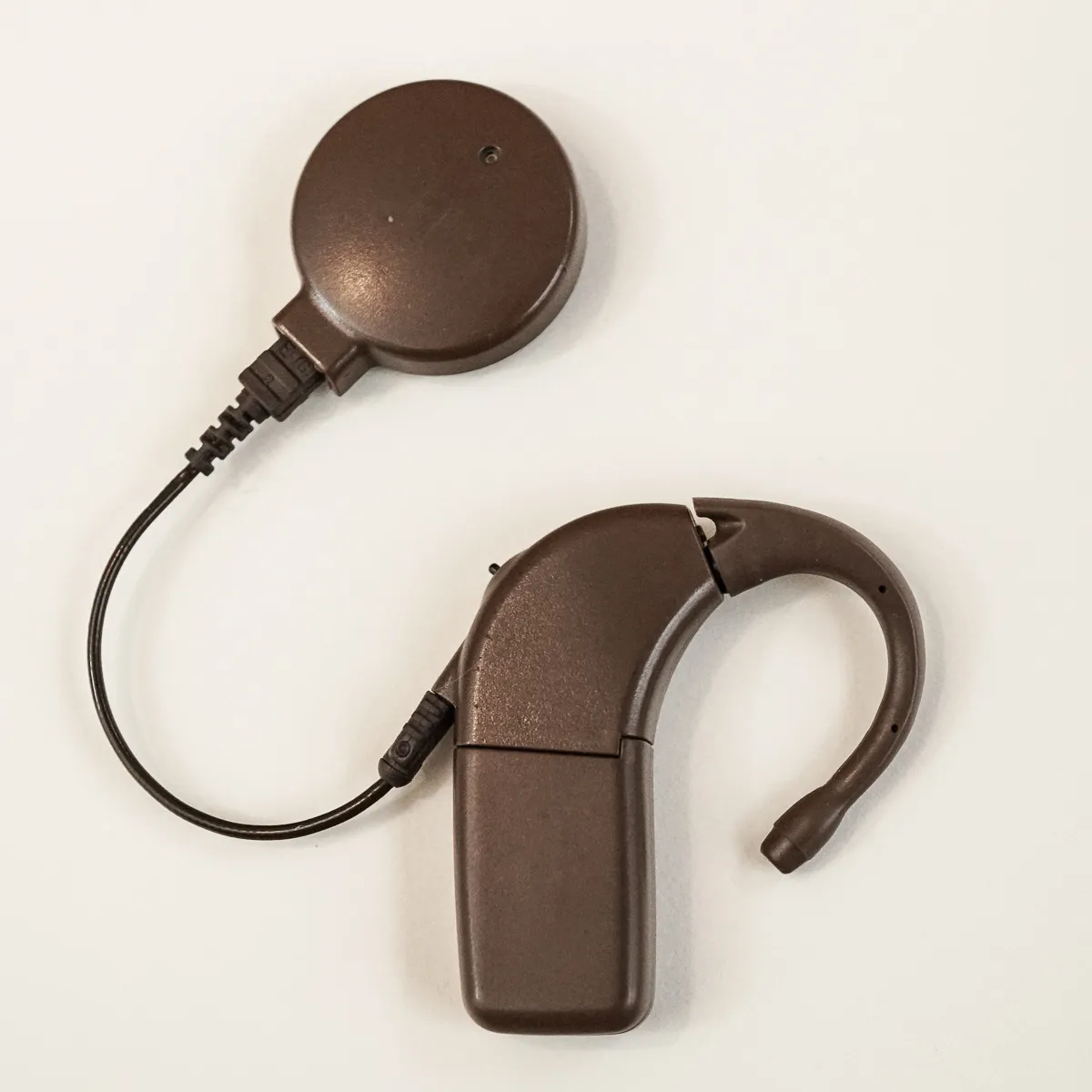
The FDA describes a system with an external microphone and processor, a transmitter, and implanted components that stimulate the auditory nerve. It bypasses damaged parts of the ear rather than repairing them. Hearing through an implant differs from ordinary hearing and requires learning; candidacy and outcomes depend on individual circumstances. This is established clinical technology, not a new experimental discovery. FDA
A system built around communication
For a woman considering technology after a change in hearing, the interesting question is what becomes easier: following a conversation, hearing a familiar voice, or participating without constant effort. Those goals cannot be read from a processor specification. They belong in an assessment with an appropriate hearing-care team.
Semnal’s view is that neural interfaces should be judged as complete systems. The implant, external equipment, fitting, rehabilitation and continuing support all matter. A small component does not necessarily mean a small commitment. Nor does being over 50, by itself, identify someone who would benefit.
The conversation beyond the processor
Ask how the proposed system will be evaluated against your own communication goals, what training involves, and who maintains it. A demonstration of speech recognition is a starting point; understanding its relevance to everyday listening is a separate conversation.
Why this belongs beside frontier research
The cochlear implant offers a useful comparison for the retinal chip: neither simply repairs the original sensory organ. Both stories involve translating information and learning to use the resulting signal. The comparison concerns a design principle, not equivalent outcomes or interchangeable candidacy. Understanding an established interface makes the next experimental one easier to question.
The idea in view
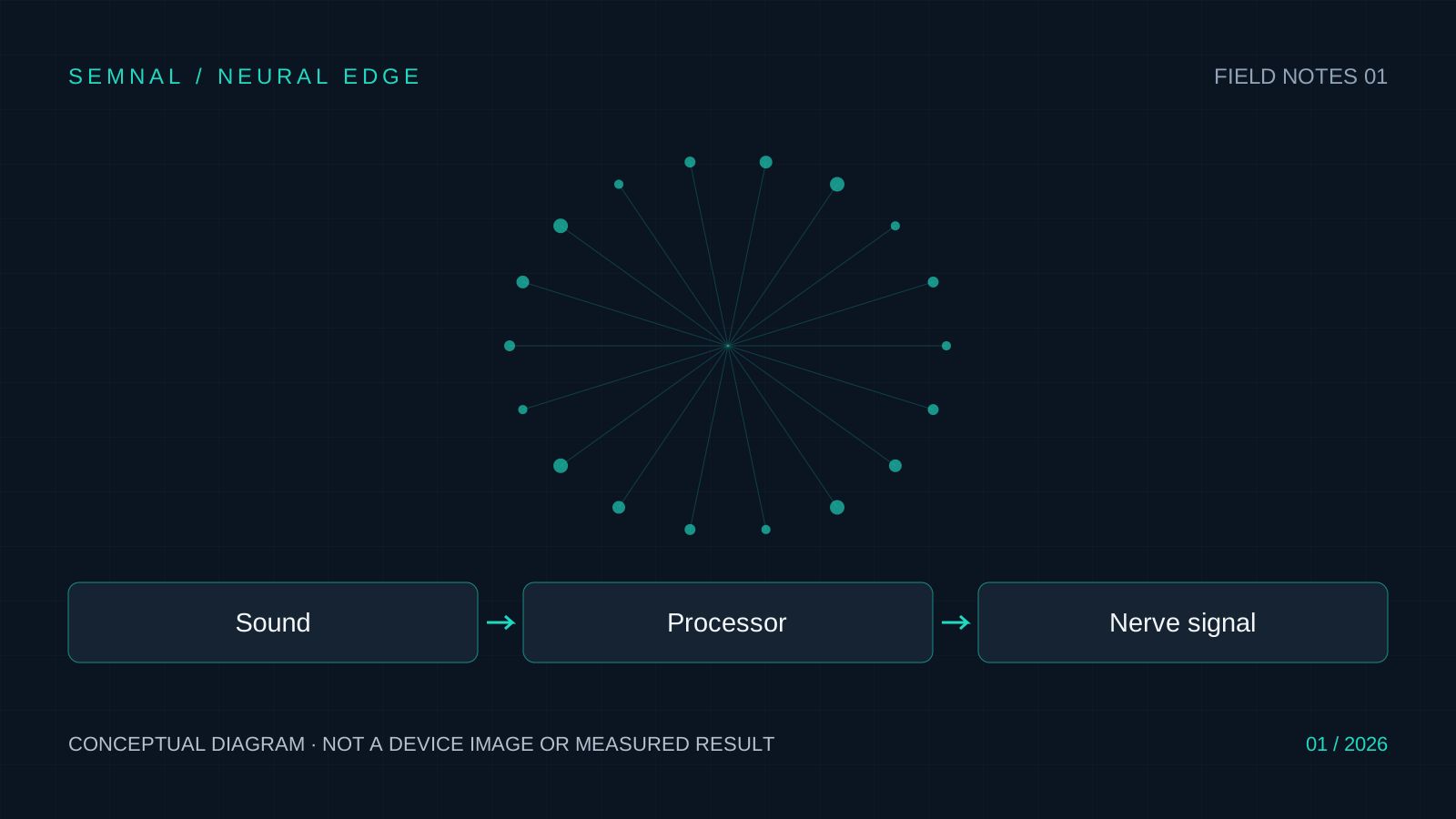
Original Semnal diagram. A simplified explanation, not a photograph of the device or a clinical result.
Sources and editorial note
Source note · 17 September 2026. Research dates refer to the original work. Prepared with AI assistance from the linked sources; no hands-on testing or interviews. Methods, disclosures and corrections.