



A more responsive prosthetic leg may depend on a surgical connection as much as a better motor. Research into agonist–antagonist muscle interfaces places the body’s remaining signals at the centre of prosthetic control.
The study combines surgery and a neuroprosthesis
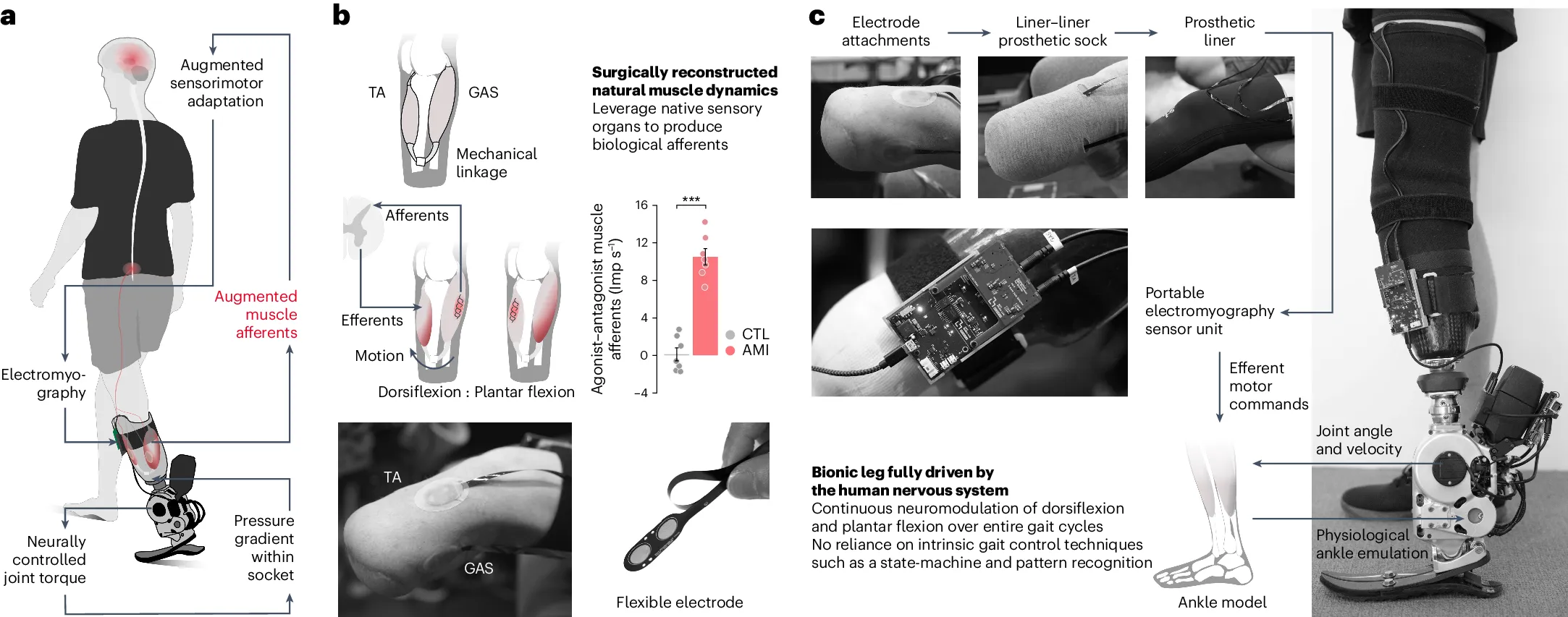
MIT’s July 2024 account describes research combining a particular amputation approach with a neuroprosthetic system. The surgery preserves communication between opposing muscle pairs, supporting feedback and control. The reported study involved seven people with this interface and a comparison group with conventional amputations. This is a specific research pathway, not evidence that every existing prosthesis can acquire the same capabilities through a software update. MIT News
A better connection is part of the technology
For readers, the important distinction is between changing a device and changing its connection to the body. A promising outcome can involve both, which makes the clinical context essential. The effect should not be attributed to a robot alone when surgery and rehabilitation are part of the intervention.
Semnal’s question is whether greater control translates into a life the user finds easier to navigate. Demonstrations on stairs and obstacles can show capability, while daily wearing comfort, maintenance and the experience of rehabilitation require their own evidence.
The interface begins in the body
The agonist–antagonist muscle interface reconnects opposing muscle relationships rather than treating the remaining limb only as a source of electrical commands. In plain language, the engineering concerns how the body senses and controls movement as well as how the prosthesis moves. That is why the surgical method belongs in the explanation, not in a footnote to the hardware.
The Nature Medicine paper compares seven people with the interface with seven people with conventional amputations. It examines a defined neuroprosthetic arrangement. The result should not be converted into a promise that any powered leg will perform similarly, or that a software upgrade can reproduce a change that depends on surgery. Original research
A fair comparison needs the complete intervention
When a result involves surgery, a device and training, the article should identify that combination before attributing the benefit. Otherwise, the most visually striking component—the robotic leg—can receive credit for work done by the entire system. This is a recurring problem in technology coverage because a machine is easier to photograph than a feedback pathway.
For a reader, separating the components also makes the practical questions clearer. Which part is already established? Which part was specific to the study? Which people were eligible? How much support was involved? These questions help turn a demonstration into a comprehensible account of a treatment pathway.
Beyond an impressive walk
A useful next evaluation would consider the range of activities that surround walking. Standing while talking, changing direction and managing a pause can matter as much as completing a measured course. Comfort and the effort of preparing the system also belong to the total experience. These are editorial priorities for further evidence, not outcomes that this article claims the study established.
For women over 50, relevance depends on the specific amputation and clinical circumstances, not on a broad promise of improved mobility. The aim is to explain an option under development without encouraging a reader to map a striking result onto a different situation.
The research earns attention because it relocates part of the innovation from the machine to the relationship between machine and body. That is a more substantial idea than a faster or more powerful prosthesis. It also sets a demanding next test: showing that the combined approach delivers sustained, useful control for a wider range of people, with a clear account of the clinical work required.
Long-term usefulness needs its own evidence
Longer follow-up and broader participant representation are needed to clarify the balance of risks and benefits. Women over 50 should not have to infer their likely experience from a compelling demonstration involving a different group. The research is valuable precisely when its boundaries stay visible.
The idea in view
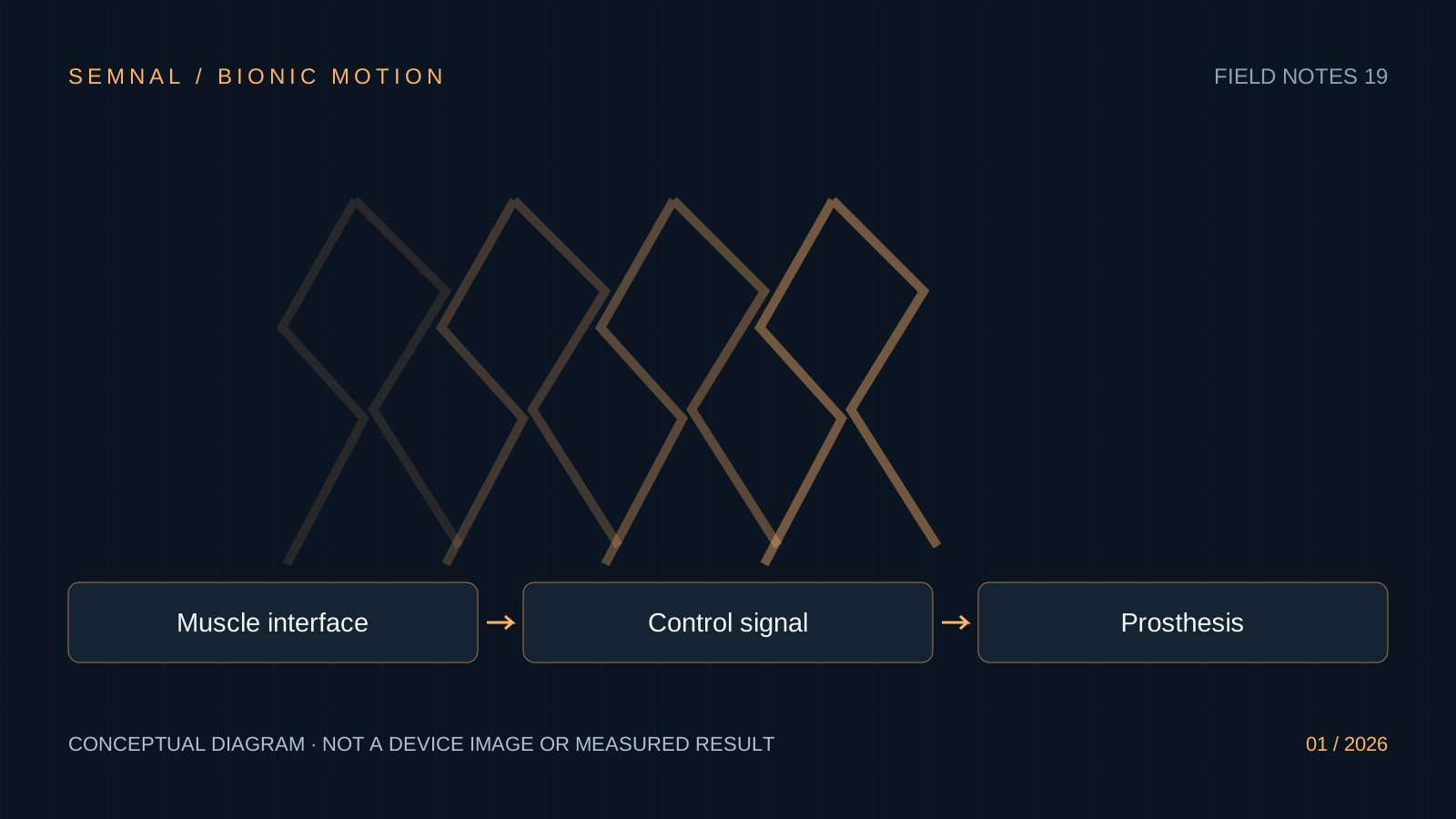
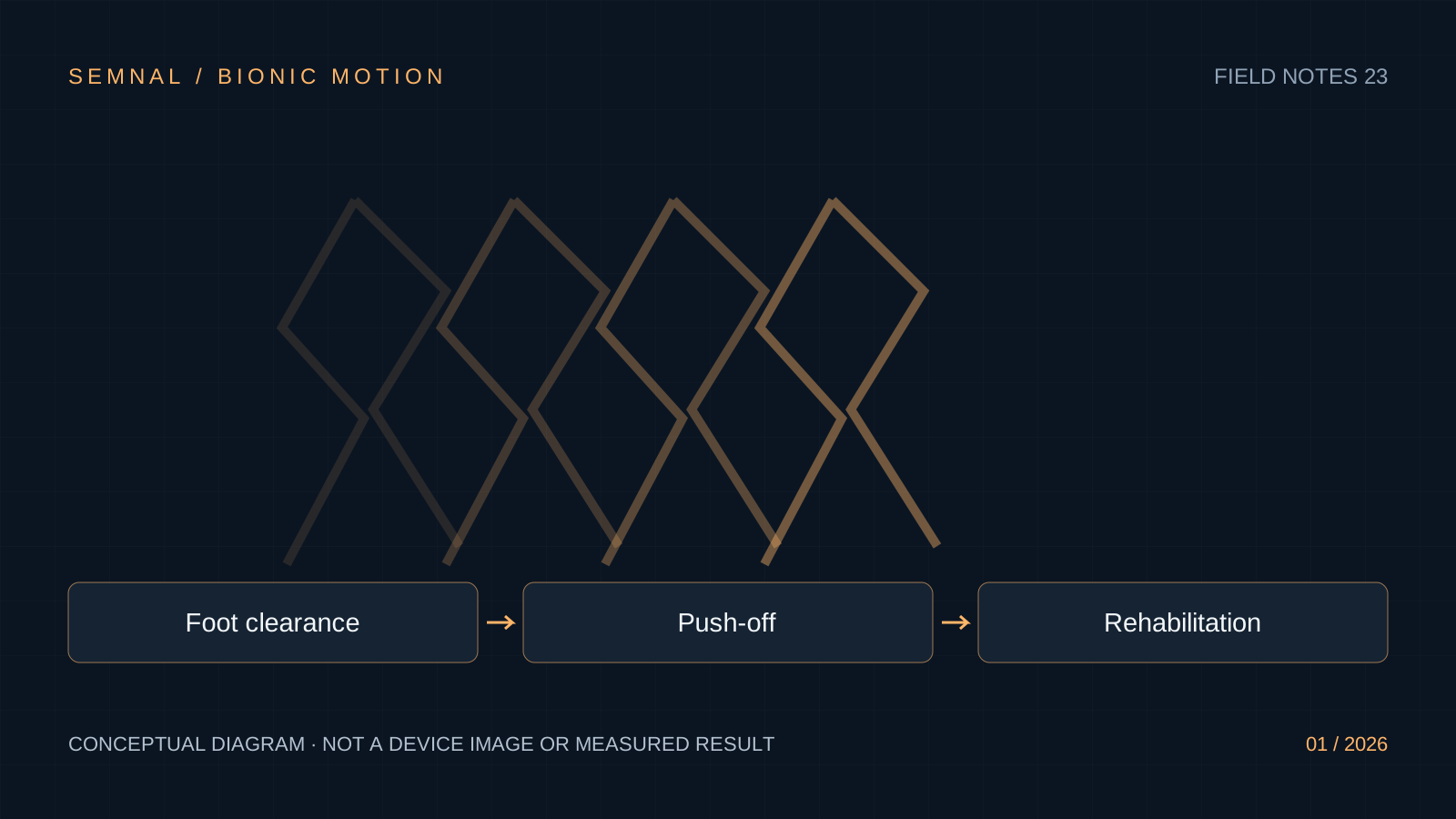
Original Semnal diagram. A simplified explanation, not a photograph of the device or a clinical result.
Read the original peer-reviewed study.
Sources and editorial note
Source note · 26 October 2026. Research dates refer to the original work. Prepared with AI assistance from the linked sources; no hands-on testing or interviews. Methods, disclosures and corrections.