


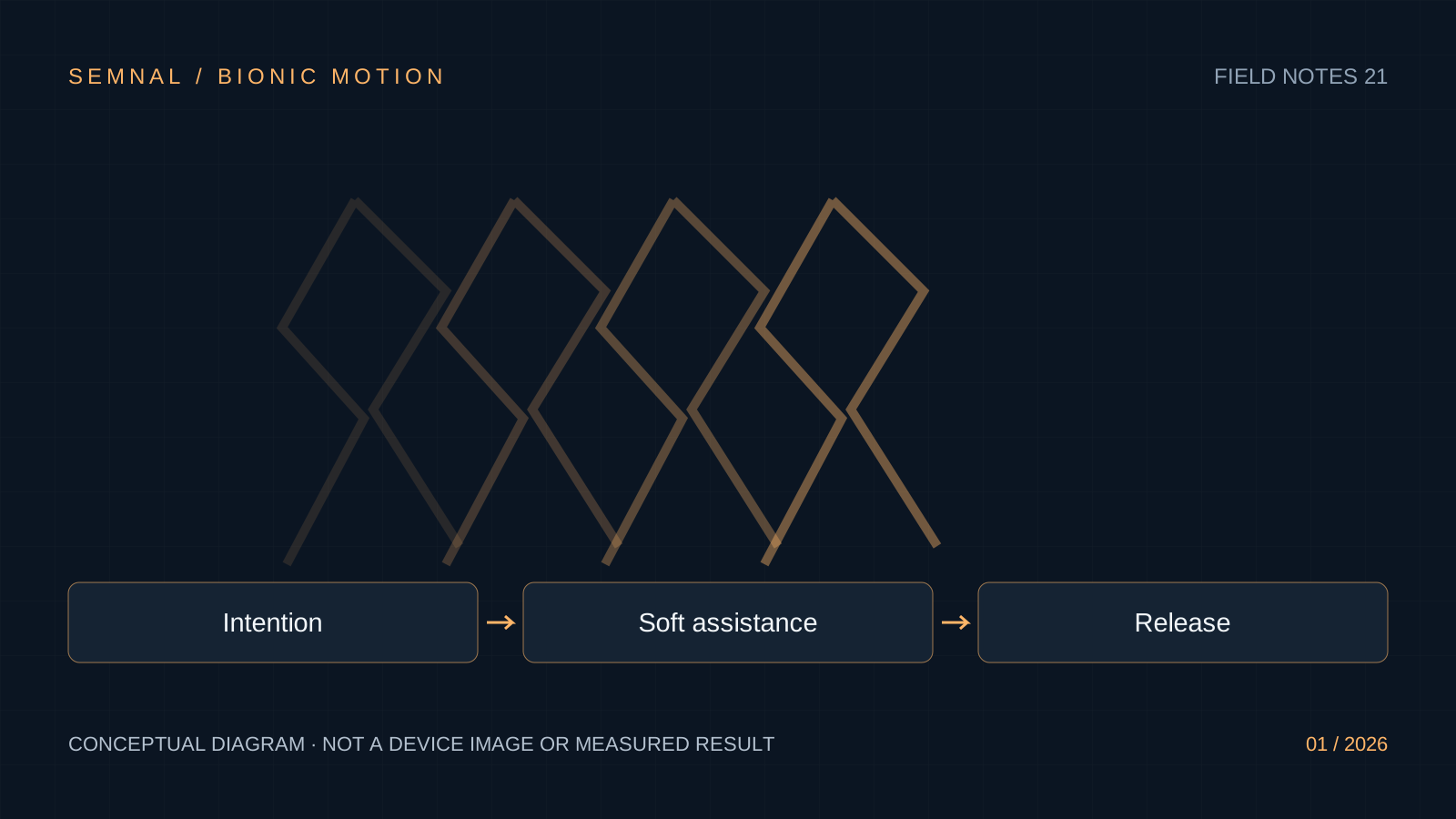
A robotic glove does not have to resemble a metal hand. Soft structures can apply assistance while leaving much of the hand’s movement unconstrained. The challenge is to help with an intended action without making release or independent movement harder.
Soft assistance for a defined task
Harvard’s Biodesign Lab describes its Grip Glove work as soft wearable assistance for hand function, with evaluations using structured hand-function tasks. The project illustrates an approach to robotic grasp support rather than a single universally suitable consumer product. The lab description is a first-party research source, not an independent product test by Semnal. Harvard Biodesign Lab
Gripping and letting go both count
For a reader interested in hand independence, the real unit of usefulness is a task: holding an object, adjusting the grip and letting go when desired. A stronger grasp is not automatically a better interaction if the glove is cumbersome or difficult to control.
Assistance while wearing a glove is different from lasting improvement after training with it. Those are separate claims requiring different studies. Neither can be inferred merely because a device bends the fingers successfully. Age alone also does not tell us which kind of hand impairment, if any, a person has.
Fit is part of function
Future evidence should describe setup, sizing, skin comfort, cleaning and safe release as well as performance. Studies involving older women with the intended clinical condition would help answer whether the design fits this audience. A soft appearance is promising, but practical control is the test that matters.
A glove has a whole working day
Holding an object is only one moment. Putting the glove on, releasing the object and removing the device belong in the same evaluation. The home-rehabilitation article asks a related but different question: what changes when a glove becomes part of a supported therapy programme, rather than assistance for an isolated task?
Sources and editorial note
Source note · 19 May 2026. Research dates refer to the original work. Prepared with AI assistance from the linked sources; no hands-on testing or interviews. Methods, disclosures and corrections.